|
May 9, 2009
Arthur Danto in his book The Abuse of Beauty: Aesthetics and the Concept of Art makes an important point: "Good art may not be beautiful." As he put it: "I regard the discovery that something can be good art without being beautiful as one of the great conceptual clarifications of 20th-century philosophy of art."
This directly challenges aestheticism, which holds that regards beauty as an end in itself, and attempts to preserve the arts from subordination to moral, didactic , or political purposes. This term is often used synonymously with the Aesthetic Movement, a literary and artistic tendency of the late 19th century which may be understood as a further phase of Romanticism in reaction against philistine bourgeois values of practical efficiency and morality.
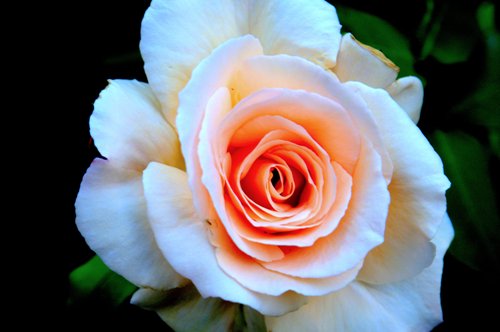 Gary Sauer-Thompson, rose, Solway Crescent, Victor Harbor, 2008
At the beginning of the twentieth century, the creation or representation of beauty was one of the aims and prerequisites of art. Within fifty years this status, as it had been known, was erased by the avant garde. On some accounts the impulse of modern art is the desire to destroy beauty in the sense of ornamentation or prettiness or pleasant.
Beauty is decentred as a value, and it is effectively exiled to the fashion world (and hairstyling and cosmetics) where it reigns supreme as artifice. Beauty for Vogue is about concealment, disguise; it's about how to manufacture appearances an art of sexual allure. Does that mean, for modernism, that the "turn away from beauty" in modernism is inevitably connected to gender politics?
Is it possible, or desirable, to reintegrate beauty as a value into our thinking about art and about life in general? The standard response is to locate beauty firmly and completely in the eye of the beholder. Beauty is wholly subjective, in that it is a pleasure of the viewer rather than an aspect of the things that give rise to pleasure. Beauty is all in the head.
|


Gary, Please find a quote:
"For some decades now, there has been a trend of opinion in some parts of the art world that "beauty" is some kind of taboo. Why should REAL and TRUE beauty be taboo? The "aesthetic experience" (including the necessary great and sublime perceptual experience of real and true beauty ) is not merely a "nice idea". Rather the "aesthetic experience" of real and true beauty---or the aesthetic and artistic manifestation of the Beautiful ITSELF--is a human necessity, even fundamental to the structure of the human body-mind. The "aesthetic experience" of real and true beauty is neurologically based---pre-"wired" into the human nervous system and brain. Any counter-aesthetic (or anti-aesthetic) effort (or any effort that opposes, or runs counter to, the "beauty-wired" aspect of the human structure) is, in effect, a form of abuse of the human being---and of the necessary right acculturation of humankind as a whole.
The true purpose of art is to draw the human being into the sphere of the "aesthetic experience"---in which the entire brain and nervous system, and (indeed) the entire body-mind and active life, is profoundly "tuned" to Reality (Itself, and altogether), and Truth (Itself, and altogether), and Beauty (or the Beautiful, Itself, and altogether)....
....There is a human necessity for a kind of resonation of vibratory participation in Beauty or the Beautiful Itself beyond conventional "yes" and "no", beyond conventional "beauty" and conventional "ugliness", beyond conventional "realism", and beyond egoity altogether. Such human profundity is a great and necessary purpose, which true art (and, altogether, true culture and right civilization) should and must serve."