|
September 1, 2009
Maurice Lye is a Christchurch based New Zealand photographer who has being exhibiting since the late 1970s. His work included in a number of survey exhibitions, including 'The Active Eye': a survey of New Zealand Photography in 2000.
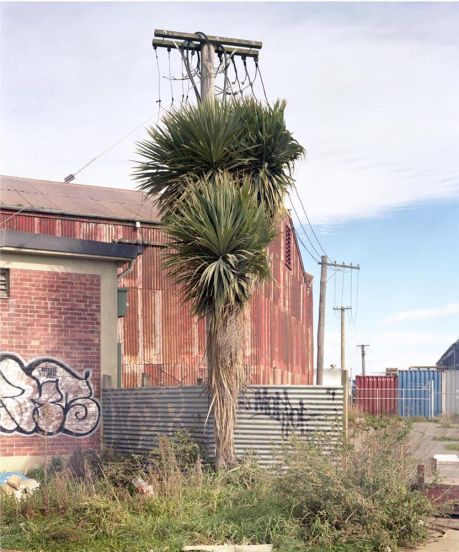
Maurice Lye Cabbage Tree, Christchurch 2007
Lye describes himself as a scavenger:
forever on the lookout for situations that appeal to my vision, sense of humour and irony. How people affect their environment, the traces they leave and their responses to the creatures and plants we co-habit with, intrigues me and provides fertile ground for exploration
The Tree portraits are of trees that are almost invisible, because they are so common place. His latest work on sea tulips entitled Board Members is exhibited at Gilt, an online art gallery located in Christchurch.
 Maurice Lye, sea tulip, from Board Member series Maurice Lye, sea tulip, from Board Member series
Lye says that the stalked sea tulips (Pyura pachydermatina):
start out as tadpole like larvae, swimming about trying to find a suitable location to take up residence for the rest of their lives. A prime spot could be a rock, wharf pile or any piece of solid sea bed. Once found, this location will have to provide “the right” conditions that will allow the filter feeding siphons of the animals access to an abundance of planktonic food in the surrounding water. To secure the position the larva adheres itself to the spot and starts to transform into an adult. During their one - two year life span they can grow up to 50cm, most of this is stalk. The ‘flower’ heads are about 20 - 80mm.
The specimens displayed in this exhibition were gathered at Riverton, in Southland. Sometimes many thousands of these creatures are washed up on the eastern beaches of the South Island.’
|


