|
October 1, 2009
By Design on the ABC recently had a programme on Julius Shulman, the American photographer of (Californian) modernist architecture of the 1950s that incorporated the sleek lines, broad expanses of glass, and steel frame construction popularized by European architects in the 1930s.
 Julius Shulman, Beach House, Uruguay
He shot glossy, stylized images of California cool, which in turn promoted the architecture of Richard Neutra, and John Lautner, and their colleagues. His iconic photographs symbolized the polished freedom of LA living, evoked by shots like that of models lounging in Pierre Koenig’s Case Study House No. 22.
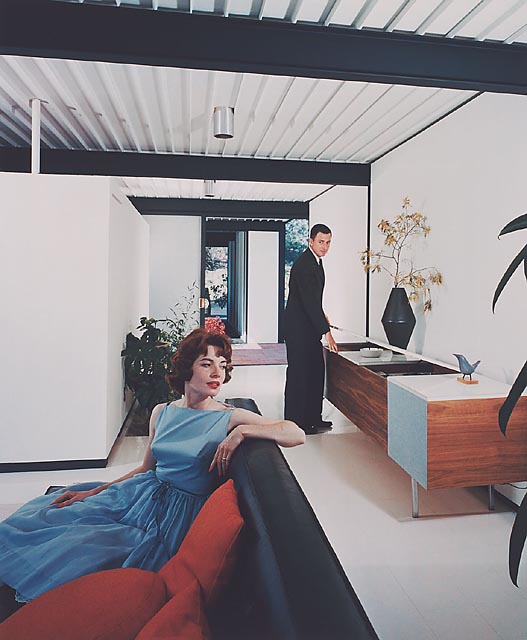 Julius Shulman, Case Study House No. 21 in Los Angeles by Pierre Koenig (1958), J. Paul Getty Trust.
His images were dramatic and clean, like the lines of the modern buildings he shot, but also playful, redolent of the easygoing California lifestyle that he helped to define. His specialty was domestic architecture, and in his later years, with the rediscovery of mid-century modernism and the helpful promotion of the publisher Taschen, he became something of a minor celebrity.
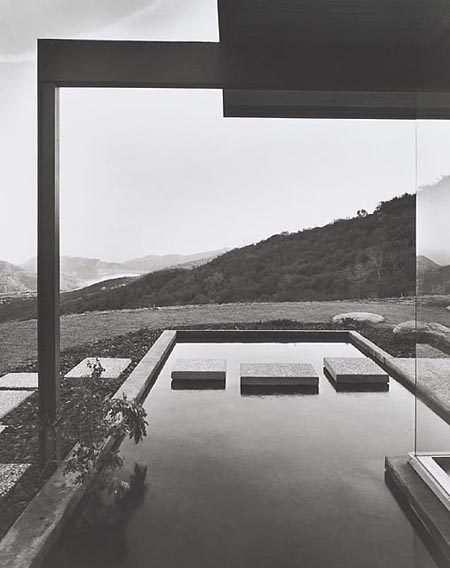 Julius Shulman, Singleton House, Los Angeles
Giselle Arteaga-Johnson in Narrating Modern Space:The Interior View says of Shulman's architectural work that:
He frames his images as narratives by photographing interrelated compositions of space and Modern furniture that serve as guides, allowing the viewer to imagine walking through the room. In this way, Shulman depicts homes as stage sets, using furniture and architecture to suggest a modern living style unique to California....Shulman achieve[s] the unique effect of blurring the lines between what is inside and what is outside
These glamorizing of Los Angeles depicts a fantasy portrayal of Southern California's relaxed and very influential lifestyle characteristic of the post World War II era.
|


architectural photography often leaves me cold. I appreciate the formal construction of the modernist image as beauty but it says nothing about our experience of modernist buildings.
What the work of Shulman's work highlights is that it is more the selling of a dream about glamour, beauty and modernity.