|
October 22, 2009
Photographic culture is currently marked by nostalgia as well as archiving archiving photographic criticism and scholarship.
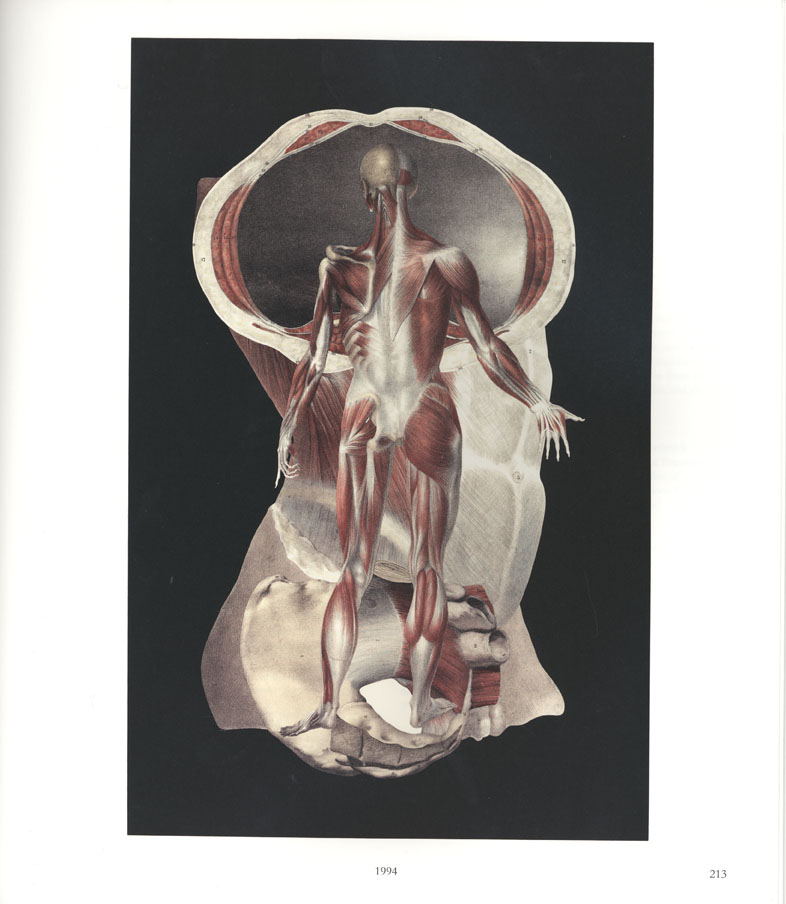 Friedrick Sommer, date unknown
The photo-historical literature that developed around analogue photography trace photography's path as originating in the context of industry and ending up somewhere near, but not within, the fine-arts in the art institution. 'Fine-arts' is such an old fashioned world. Why not pictorial arts?
If photography is the primary craft there is no reason to stop practicing painting and drawing at the same time. An example is Friedrick Sommer, who integrated the use of so many media and expanded the traditional boundaries of photography in the process.
Photography's traditional path shifted from an emphasis on the "making" to the "maker" of photographs giving rise to the emergence of the photographer as artist. Art is about "expression" rather than imitation in that the poet through his sentiment transformed simple language into an individual expression. Thirdly, we have the conscious recognition and propagation of photography's inherent qualities that was made explicit in the modernist idea of the concept of straight photography, whose ethos of purity rejected both manual alterations (ie., Pictorialism) and the commercial aspects of photography industrial photography).
The digital revolution provides us with spaces to allow us to us to try to break out of this discourse of photo-historical literature.
|


