|
January 3, 2010
One of the ways out of the dead end of postwar architectural Modernism, whose early hopes had deteriorated into a dreary corporate functionalism was Learning From Las Vegas. This architectural manifesto and its heartfelt embrace of American popular culture as expressed in the Strip, which in 1968 was a string of flimsy signs, isolated hotels and half-empty parking lots.
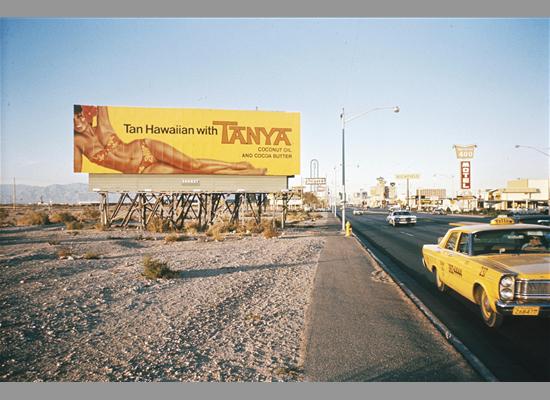 Denise Scott Brown, Las Vegas, circa 1968
This mid 20th century America was a world of freeways and McDonald’s drive-throughs and Venturi and Brown's polemic from the everyday commercial urban landscape drove a pop sensibility deep into the heart of architecture.
Robert Venturi & Scott Brown were engaged and committed to "what is already there", especially signage, and specifically the undesigned, commercial roadside vernacular signage.
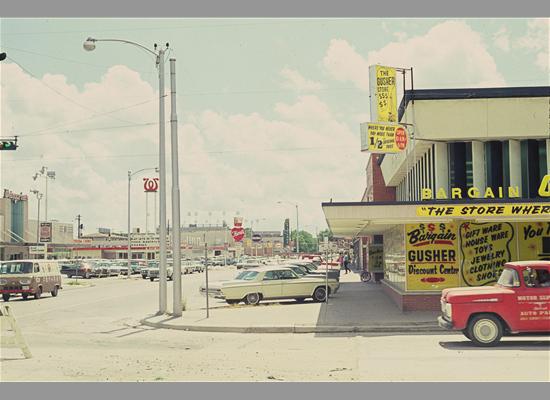 Denise Scott Brown, Las Vegas, The Strip, circa 1968
The Strip in the 1960s was a road lined up with neon signs and the signs and symbols of strip development werre juxtaposed against a modernist brutalism impervious to its urban context by Venturi & Scott Brown. The Strip is a wildly exaggerated version of the commercial strip outside of many American cities, and it was created to accommodate to the automobile. It stands for growth.
Today it is no longer the sign that tempts drivers-by, but the themed attractions and The Strip uses contemporary architecture as an element of style, class and spectacle.
Update
There was a big conflict over the design of the book.
|


