|
February 26, 2010
Given the recently discovered importance and significance of Reserche Bay as a site for wilderness preservation in Tasmania I was surprised to stumble upon spaces such as this amongst the rain forest:
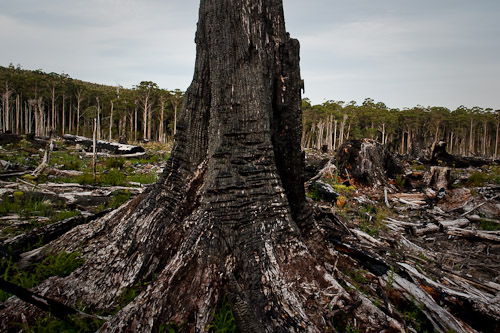 Gary Sauer-Thompson, stump, Recherche Bay, 2010
This is one aspect of the settler or pioneer history of British settlement and frontier industry in Tasmania. There are saw mill sites, sawdust heaps, discarded machinery, tramways, wharves and house areas--along with the clear felled spaces amidst the native rain forest and wilderness. Hence the idea of natural and cultural heritage--- world heritage based on the natural landscape been modified through the various industrial and occupational activities.
John Mulvaney writes in The axe had never sounded’: place, people and heritage of Recherche Bay, Tasmania about a cultural landscape:
Australians came late to the realisation that their natural environment and the historical imprint of past generations upon the landscape were valued possessions to treasure. Such features comprised not only material traces, such as forests, geological monuments, buildings, ruins or archaeological sites, but also intangibles associated with past persons or events, symbolic of ideas, memory or spirituality.
Such intangible or non-material factors present alternative considerations, additional to potential economic development or that overworked catch-cry of ‘jobs’. When carefully assessed, these valued places may provide different opportunities for employment or development, such as tourism. Even when they cannot, once-off economic investment or temporary employment should not be the sole criterion in a balanced approach to Australia’s long-term cultural or ecological future.
It adds that Recherche Bay is a cultural landscape. Although it was known as the French landing place, its role in providing a palimpsest of Tasmanian history was neglected until recently. It was the reported discovery of Delahaye’s 1792 garden, in January 2003, that highlighted the potential significance of the area. Whether it really was the garden became less important when historical sources were consulted on the totality of the French visits. He adds that:
The French expedition undertook scientific studies, while subsequent European activities across almost two centuries left imprints upon the landscape, although often concealed beneath vegetation. It is important to stress that my reaction, and that of most people, was not an attack upon the forest industry or the rights of landowners. It simply was that this small area was too significant to destroy.
As expected the Tasmanian Government was resistant to this idea because it meant that logging had to cess.
|


