|
April 2, 2010
I have a copy of David Eggleston's Into the Light: A history of NZ Photography, which I bought when last in NZ. It's narrative is a traditional one as it is based on selecting the best photographers made by camera artists who are masters [sic] of the medium and who have established their own style and content.
The last chapter of the book is called "Seductive Puzzles The Age of Ambiguity", and it refers to the 1980s when new image makers in New Zealand challenged the conventions of traditional photography. Eggleston says:
These conceptual photographers used such strategies as parody, appropriation, and minimalism to expose photography's ambiguous, even contradictory meanings. By doing so they hoped to to discover new ways of looking at old familiar things.
One photographer mentioned is the Wellington based Mary McPherson.
McPherson is a poet as well as a photographer and has published two book of book of poems: The Inland Eye was published by Pemmican Press in 1998 and Millionaire’s Shortbread, University of Otago Press 2003 (joint collection).
Her 1992 Wild series photographed flyaway rubbish caught in undergrowth sounds intriguing, but I can find no images online for this series. Some of her 17 Days of Shopping (1998) is one line due to it being published in Sport (no 25, 2000), a literary periodical. It is a series of close photographs of the food and groceries bought over 17 days --- pictures of what comes home in the supermarket and takeout bags.
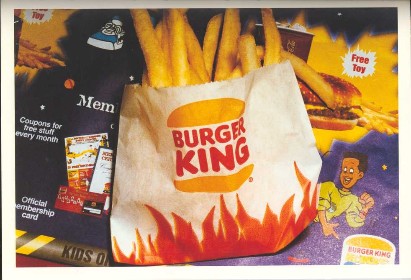 Mary McPherson, Burger King, from 17 days Shopping
The full 17 Days of Shopping work consists of 95 photographs and emphasises the procession of goods that flow in and out of her households lives. She says of this work:
As I worked I remembered how New Zealand was once a place of vegetable gardens and home baking, when takeouts or restaurant meals were special events. Now what's important is to have the money to buy groceries and food from the supermarket. Increasingly, the food is processed and packaged so we can heat and eat. Purchases are guided by brands, especially the pictures, text and design on packages. Curiously, these images often refer back to rural scenes, flowers or freshness as a guide for purchasing.
A recent series is Plant Life
|


