|
August 22, 2010
Space and place are complex.Though different concepts, they merge into one another. Nonhuman animals also have a sense of territory and of place. Spaces are marked off and defended against intruders. Places are centers of felt value where biological needs, such as those for food, water, rest, and procreation, are satisfied.
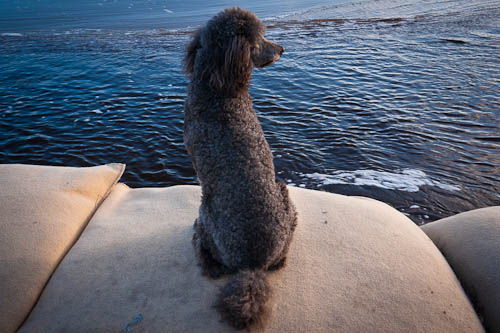 Gary Sauer-Thompson, Agtet, Hindmarsh River, Victor Harbor, 2010
Yi-Fu Tuan in his Space and Place: the perspective of experience says:
"Space"and "place" are familiar words denoting common "experiences. We live in space. There is no space for a another building on the lot. The Great Plains look spacious. Place is security, space is freedom: we are attached to the one and long for the other. There is no place like home. What is home? It is the old homestead, the old neighborhood, home- town, or motherland. Geographers study places. Planners would like to evoke "a sense of place." These are unexceptional ways of speaking. Space and place are basic components of the lived world; we take them for granted. When we think about them, however, they may assume unexpected meanings and raise questions we have not thought to ask.
The ideas "space" and "place" require each other for definition. From the security and stability of place we are aware of the openness, freedom, and threat of space, and vice versa. Furthermore, if we think of space as that which allows move-ment, then place is pause; each pause in movement makes it possible for location to be transformed into place.
|


