|
October 14, 2010
Thomas Joshua Cooper is the head of photography at the Glasgow School of Art. He only works with an 1898 AGFA 5×7 field camera, only makes images outdoors, and only ever makes one image in any one place. Each work begins as a location found on a map, researched and tracked down, before the picture is made. Each site, the subject of a single frame.
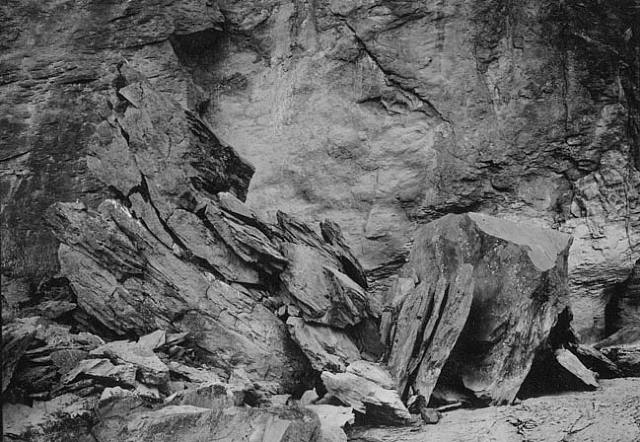 Thomas Joshua Cooper, Broken Boulder, Remembering Timothy O'Sullivan 'Along Snake river, Pillar Falls Canyon, Idaho, USA, 2003-4, silver gelatin print
The World’s Edge – The Atlantic Basin Project---is an ambitious mission, begun in the early 1990s, to photographically ‘map’ the extremities of the lands and islands of all five continents that surround the entire
Atlantic Ocean.
Cooper is best known for his Atlas Project. Inspired by reading about Magellan’s circumnavigation of the world in the 16th century and the lasting impact that has had on world history, Cooper set out about 20 years ago to “chart” the Atlantic Basin, capturing points of land he had picked out on a map.
 Thomas Joshua Cooper, Pillars of Hercules, The Strait of Gilbaltar, 2003-4, Siiver gelatin print
Cooper has published the photos from each segment of his photographic journey, from South Africa to Scandinavia (point of no return, 2004), along the eastern coast of South America (Ojo de Agua, 2006), in the Arctic and Antarctic (true, 2009), and, during his Guggenheim Fellowship term, up the eastern and Gulf coasts of North America, exploring the Rio Grande, Mississippi River and Hudson’s Bay as well. Once this final section is completed, Cooper will collect these parts into a single work titled “An Atlas of Emptiness and Extremity.”
|


What do you think of the sunflower seeds at the tate?