|
June 27, 2011
I've seen the odd photograph off and on of Frank Hurley's work as official war photographer in WW1. He was, as we would say now, embedded in the Australian Imperial Force (AIF), and his images of the battle field in Flanders--- especially around Ypres--- are stark and succeed in giving a visually coherent image of the war. I find those made whilst he was with the AIF in Palestine more mundane.
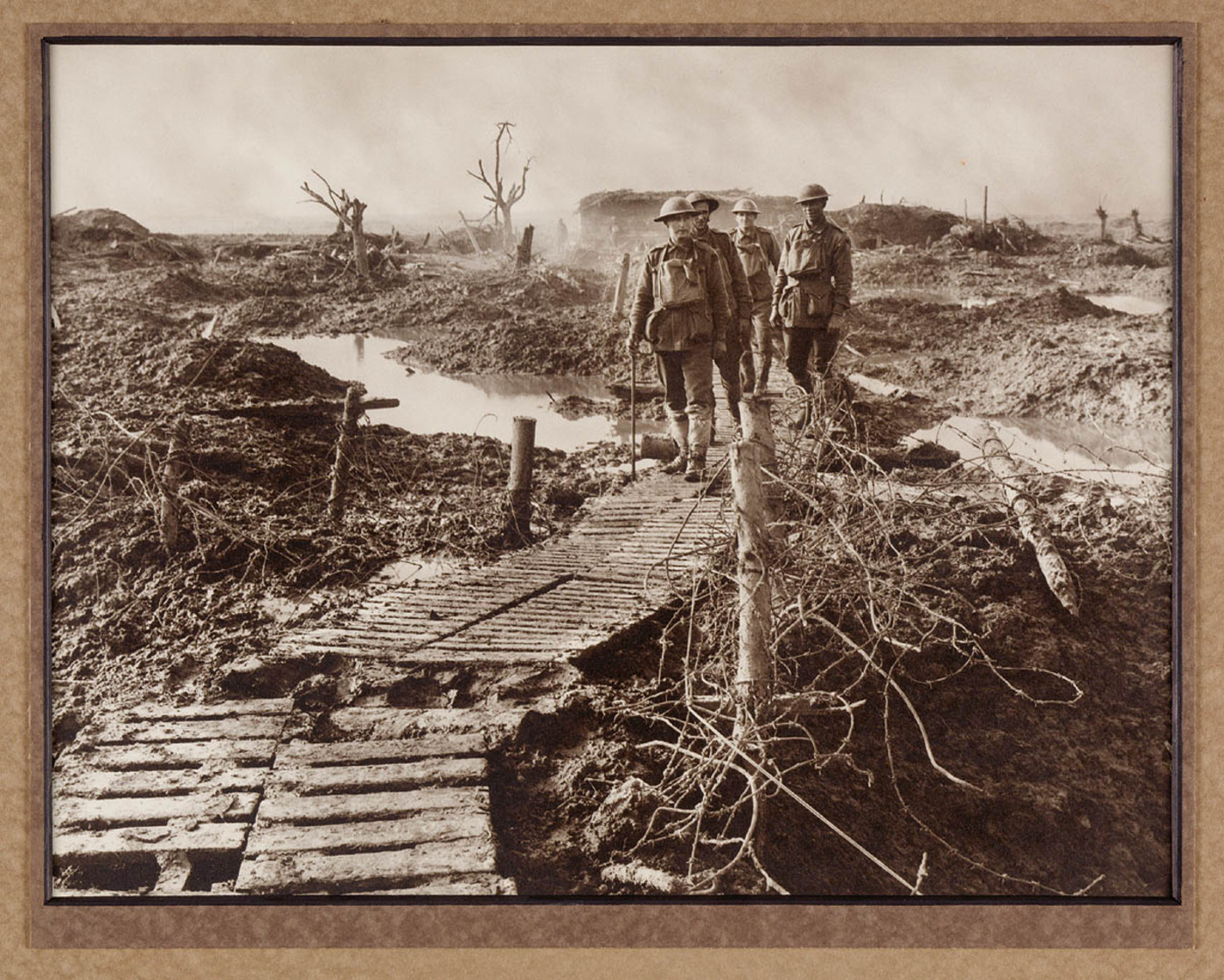 Frank Hurley, 'Just as it was', circa August 1917- August 1918, State Library of NSW
Thankfully we have fully digitalized archives of his work and it is Antarctic landscape work-- both Mawson's Australasian Antarctic Expedition 1911-1914 and Ernest Shackleton's Imperial Trans-Antarctic Expedition 1914--1916--- and his WW1 work that I find so impressive.
Less so is his work on Australia, which was an affirmation of the nations' post war prosperity. This Camera Studies work, undertaken when he was in sixties, was driven by commercial imperatives of needing to make a living, but they also express his patriotism and a pre -modernist aesthetic--especially when compared to the contemporaneous work being done by Wolfgang Sievers.
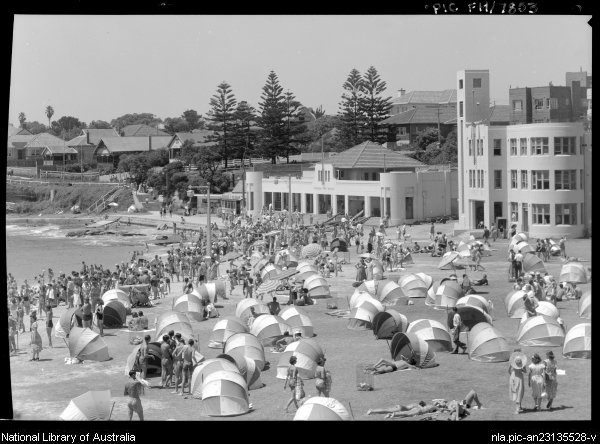 Frank Hurley, Cronulla Beach, NLA
In the Introduction to Hurley's Australia: Myth, Dream, Reality, John Thompson says that Hurley worked with a conservative view of a well ordered and affluent society that had successfully assimilated the postwave of immigrants in which everything was right and harmonious. These are images both of the Australian dream and Australia's image as a land of sheep and wool rather an image of a sophisticated industrial and manufacturing nation as in Siever's work.
His urban images--especially the aerial ones of Sydney--celebrate Australia as a modern and dynamic society. There is no dark side--no existential anguish, no fear, no inner city bohemianism reacting to a conformist, inward looking provincial and conservative society. The work is really a look back on pre-industrial Australia.
|


