|
July 27, 2011
The career of Bernd and Hilla Becher has been almost exclusively a function of the international art market and art publishing industry and the German art education system are best known for their extensive series of photographic images, or typologies, of industrial buildings and structures, such as blast furnaces, cooling towers, gasometers, water towers, lime kilns, compressors, factory halls, head-frames of mine shafts.
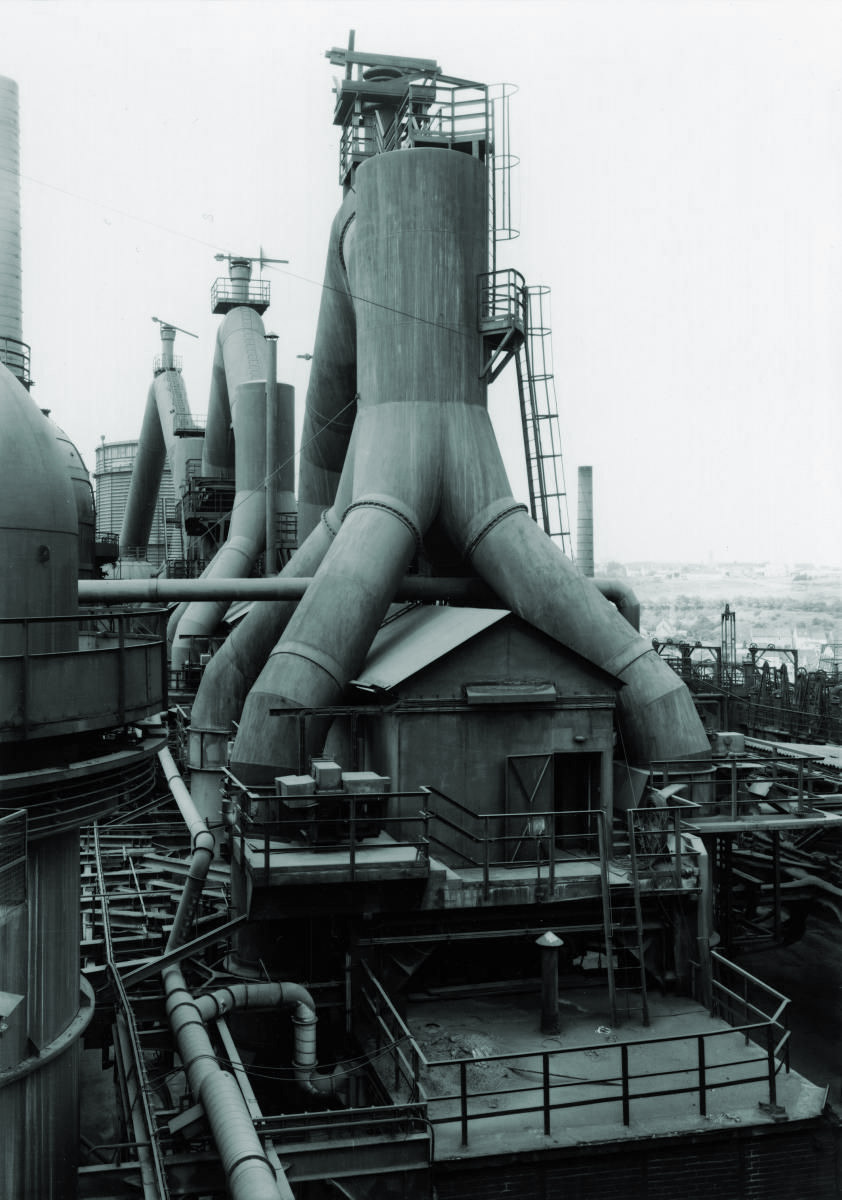 Bernd and Hilla Becher, Blast Furnace Volklingen, Saar, Germany, 1986
Their images transform these old industrial buildings into objects worthy of interest, in the character implicit in a façade. Their work, which was a return to the pre-war New Objectivity of Karl Blossfeldt, Albert Renger-Patzsch, and, August Sander, was a challenge to the expressive subjectivism of Robert Frank.
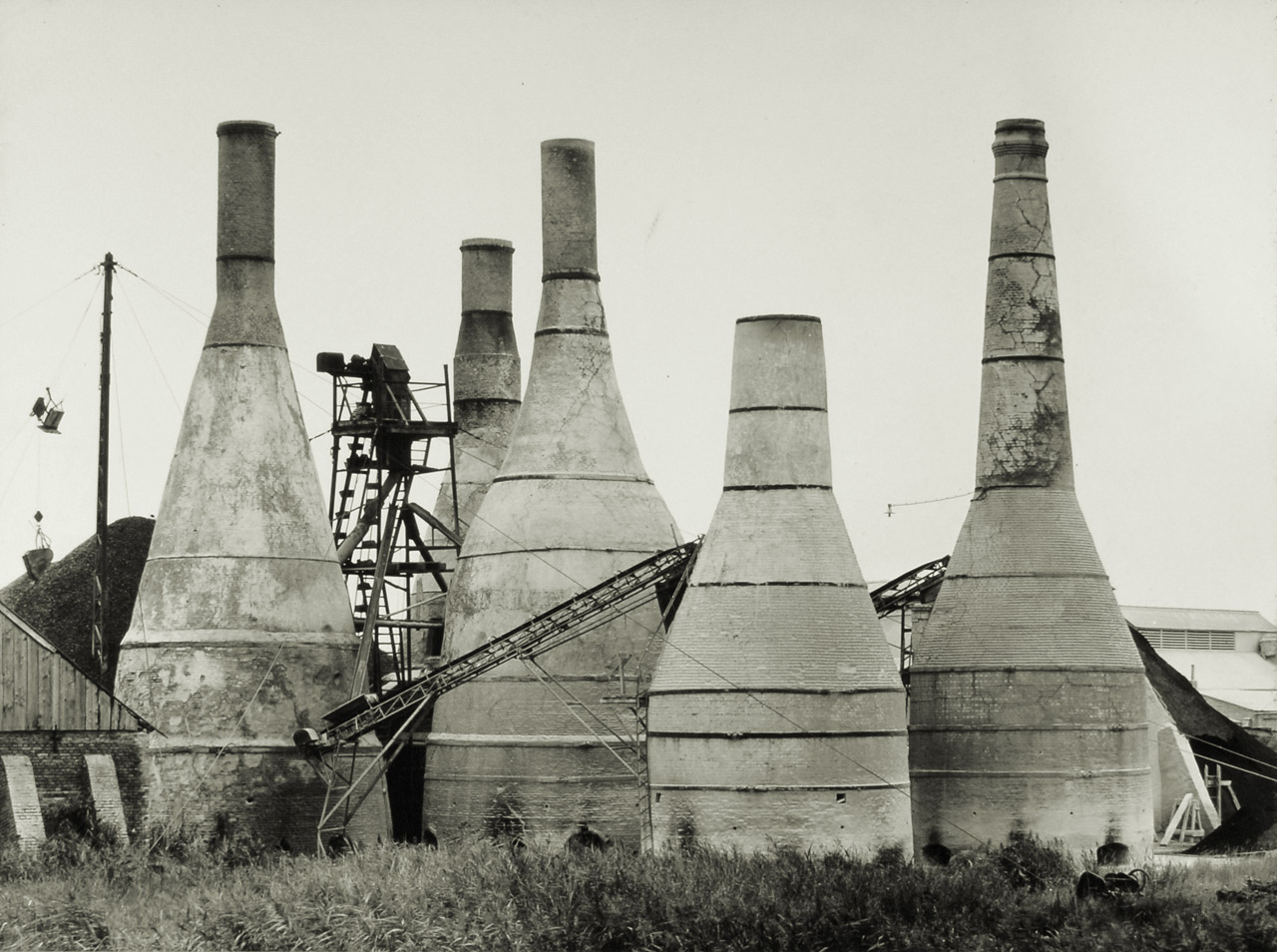 Bernd+ Hilla Becher, Lime Kilns, Kalköfen, Harlingen, 1968
Their method is akin to an archaeological analysis of industrial forms of a world recently lost. These were constructed with no consideration of so-called beauty and serve their functionality alone. When these structures lose their function they are no longer entitled to exist, so they are torn down.
Blake Stimson in a Tate Papers research paper says:
Their system is based on a rigorous set of procedural rules: a standardised format and ratio of figure to ground, a uniformly level, full-frontal view, near-identical flat lighting conditions or the approximation of such conditions in the photographic processing, a consistent lack of human presence, a consistent use of the restricted chromatic spectrum offered by black and white photography rather than the broad range given by colour, precise uniformity in print quality, sizing, framing and presentation, and a shared function for all the structures photographed for a given series.
Their objects are basic industrial forms, their method is ’typological' and they construct an archive in which single images gain a significance.
|


