|
September 1, 2011
In the late 1920's Harold "Doc" Edgerton studied at the Massachusetts Institute of Technology. Here he used a stroboscope to make a cyclically moving object appear to be slow-moving, or stationary. Edgerton was a pioneer in strobe photography. He used the technique to make images of milk drops (1937). athletes competing (1938), hummingbirds hovering (1953), bullets bursting balloons (1959), and blood coursing through capillaries (1964).
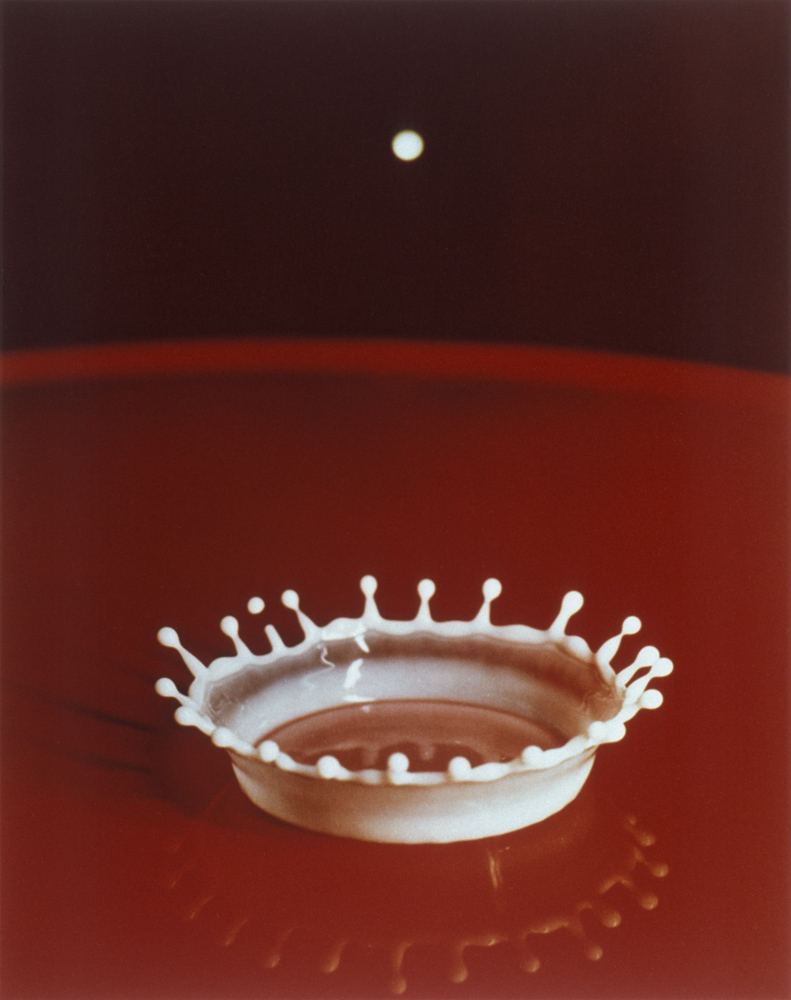 Harold Edgerton, Milk Drop Coronet, 1957.
The single idea of his photography was making the invisible visible. Edgerton succeeded in photographing phenomena that were too bright or too dim or moved too quickly or too slowly to be captured with traditional photography.
The milk-drop coronet image, formed by the splash of a drop of milk, not only introduced the poetry of physics into popular culture, but forever altered the visual vocabulary of photography and science.
|


