|
October 12, 2011
A classic example of urban renewal is Melbourne's Docklands. I spent several days walking around when last in Melbourne. I thought that it was a bad example of contemporary urban planning because of its lack of public spaces where people can gather and spend time amongst the high-cost residential/office/commercial mix.
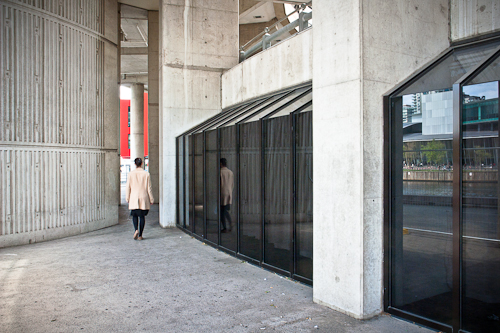 Gary Sauer-Thompson, Crown Casino, Docklands, Melbourne, 2011
In The Age Kate Shaw goes much further than my initial impressions. She says:
The much-publicised problems at Docklands, Melbourne's signature urban renewal project, are not a failure of planning; there was no planning, only the division of publicly owned land for handover to private developers to do what they wanted, with a substantial gift of state-funded infrastructure. The developers responded as developers do: focused on maximising returns, they had little regard for the public realm and no regard for what other developers were doing on neighbouring sites.
The outcome was predictable: enormous buildings on massive podiums, arbitrarily varying form with no attention to the spaces between the buildings, and large residential, office and commercial spaces demanding maximum possible rents.
At the Docklands the developers rule. The "highest and best use'' of its property for commercial return is what drives the urban renewal. That is the way of doing business.
|


