|
October 3, 2011
Modern Times: The Untold Story of Modernism in Australia. (eds. Ann Stephen, Philip Goad, and Andrew McNamara; Miegunyah Press, Carlton, Vic.) follows an earlier collection of primary sources by the same editors and publisher, Modernism and Australia: Documents on Art, Design and Architecture, 1917–1967 (2006). In Australia it was accompanied by an eponymous travelling exhibition that opened at the Powerhouse Museum, Sydney, in August 2008.
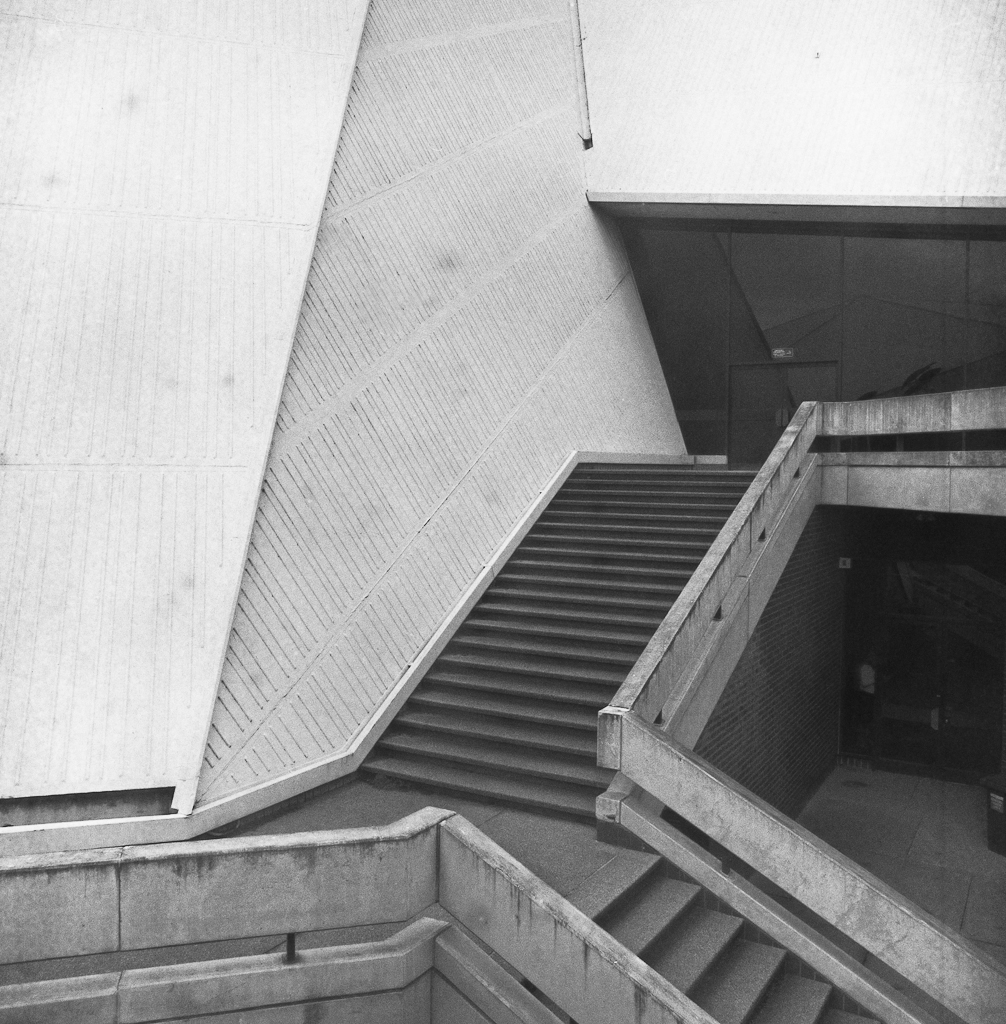 Gary Sauer-Thompson, Adelaide Festival Theatre, 2011
Modern Times is a collection of twenty-five essays that deal with the popular reception of "modernism" in Australia——in a range of media, including painting, architecture, design, fashion, photography, and advertising; and a range of sites, such as skyscrapers, exhibitions, factories, milkbars, and suburban swimming pools. It provides an interdisciplinary overview, but what are the connections? What is the central argument?
Dixon mentions the "untold" history of Australia's informed engagement with modernism as an international, interdisciplinary project spanning five decades, from 1917 to 1967 and he refers to the editors' initial arguments about modernism and social modernity, cultural nationalism and internationalism, and the belatedness or otherwise of provincial cultures. These arguments, he says, tend to drop in and out of their contributors' essays, varying as they do in content, length, and approach.
So what is the argument? It rejects Bernard Smith's received account of the Australian reception of modernism in Australian Painting (1962) as a series of belated, style-based shifts occurring discretely within painting, sculpture, design, and architecture. Belated refers to Smith's time-lag' notion, the idea that modernism in Australia was a late arrival, that it 'arrived in a suitcase' and that 'modernist influences were worked through long after the initial inventive moment had been eclipsed at its source'.
Their revision of art-historical orthodoxy led Stephen, Goad, and McNamara to make the following argument:
'we assert that there is no straightforward aesthetic narrative thread — whether realist, nationalist, social realist, surrealist, abstractionist or anti-modernist — that can cut through this tenuous and complex reception and shed light on one single, coherent explanation of the reception of modern art in Australia'.
In ReCollections Jill Julius Matthews highlights the conceptual shift:
In the first half, the modern is a specific moment in time (the inter-war period); a moment when then became now for a distant and probably foreign people; a time with its own acknowledged aesthetic (modernism), which we today recognise as historic. In the second half, the modern is our modern. The focus is on representing the process whereby our now came into existence from a proximate past.
I would accept that modernism cannot be limited to the inter-war period and that it was in the 1960s that modernist art came to a slow end.
|


