|
April 14, 2007
It's odd isn't it. The City Council sells the right of speech on public sidewalks to corporations for kiosks, billboards, mobile advertisements, newsstands as well as other bulky steel and umbrella street furniture for cafes and restaurants.
But graffiti on old walls of run down, disused buildings is commonly seen as the first step to criminal behaviour and as representing gang activity:
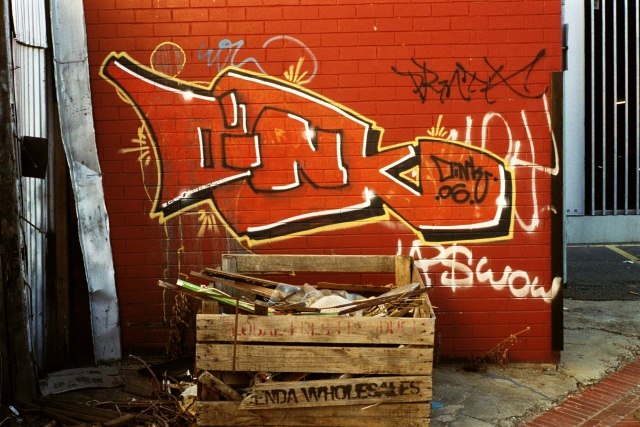
Gary Sauer-Thompson, graffiti, Central Market, 2007
Political parties can use public spaces to hang their own leaflets, election literature and announcements about local community meetings. But leaflets, billposters and sidewalk art displays are seen as defacing public spaces. So why not graffiti artists?
Public art is something that is official---a commissioned piece by an artist. What disturbs many is the way that artistic graffiti invades personal property and so offends property owners and this leads to community pressure on politicians, who respond by ordering police pressure and declare war on graffiti artists.
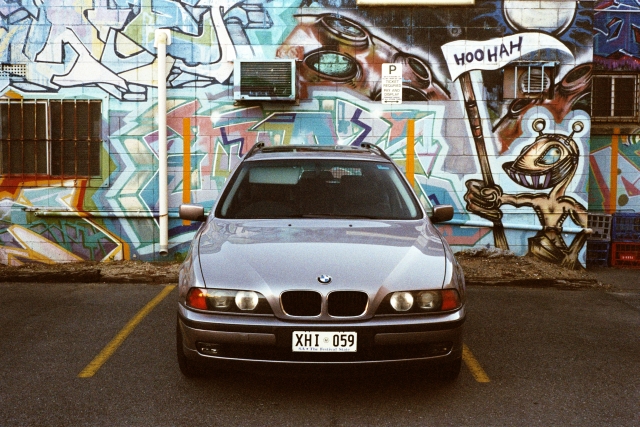
Gary Sauer-Thompson, BMW, Central Market, 2007
But artistic graffiti changes public walls in car parks, urban wasteland sites and empty empty buildings. There is so much of these dead spaces in the western part of the CBD, as the urban renewal is only just beginning. Most of the proposed renewal is on the drawing board.
This influences the formation of more positive conceptions of this form of cultural expression--- art with aerosol. We can then begin to understand the changes in graffiti culture. What we begin to see is that instead of being one rebellious monolithic culture--- a group of delinquent individuals who have little self-regard and an obvious lack of regard for public property---it is a representation of a diversity of urban voices.
|


