|
October 14, 2007
It's the light on the face of Mary Magdalen that captures one's attention. Then you notice the chiaroscuro, or the use of light and shadow.
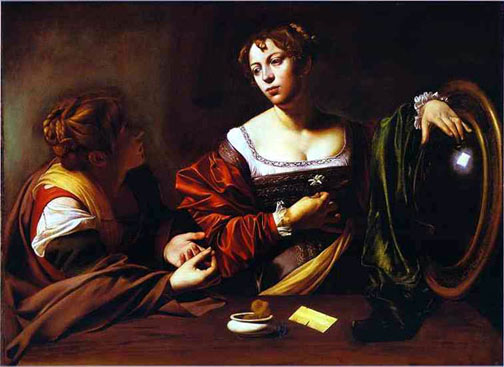
Caravaggio, Martha and Mary Magdalen, c.1598-1599, Detroit Institute of Arts
Martha is in the act of converting Mary from her life of pleasure to the life of virtue in Christ. What I find so appealing is the naturalism ---that reappeared with Dutch painting and Vermeer. We have the darkening the shadows, a transfixing of the subject in a shaft of light, and acute observation of physical and psychological reality.
Update: 15/10
Caravaggio’s innovations---including using ordinary people as models--- inspired the Baroque, whose key concepts included theatricality and excess, spectacle, sensation, and the intensification of emotional expression and response.
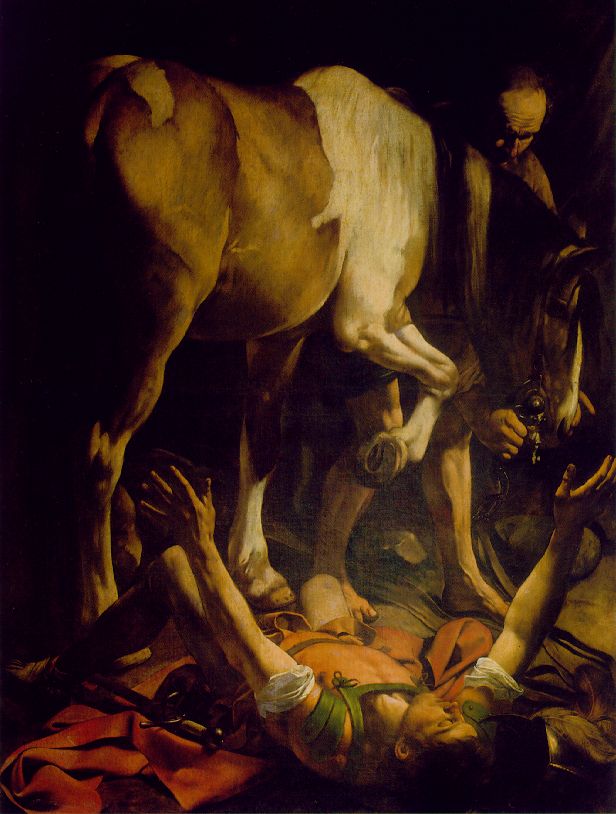
Caravaggio,The Conversion of Saint Paul, 1600-1601, Oil on canvas
Caravaggio's latter religious works featured violent struggles, grotesque decapitations, torture and death.
|


You gotta love "The 'Vagg". Would have thought you might have gone with the Conversion of Paul on the Rd to Damascus, to go with John Howards indigenous conversion this week. Is also The Vagg's best paintings.