|
January 29, 2008
As you walk along Franklin Parade in Encounter Bay, Victor Harbor in South Australia, you see a history of beach architecture in Australia laid out along the Parade. We have the initial beach shack built out of whatever was to hand; then the casual and improvised beach house built from tin or fibro in the 1950s, to the McMansions that are now muscling their way in as the beach house owners die. Their seafront properties are sold for a lot of money but the neighbourly or community bonds go and are forgotten.
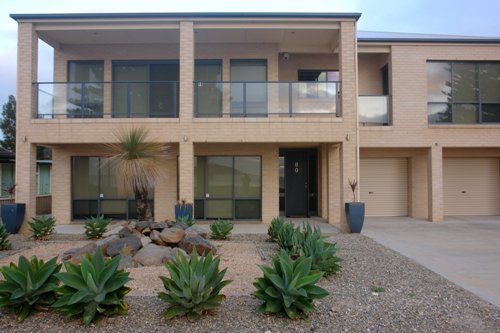 Gary Sauer-Thompson, seaside McMansion, Victor Harbor, 2008
This overblown architecture without architects is designed to show off wealth and indicate success at climbing the property ladder. They go with plasma screens, 4 wheel drives and boats, designer casual gear and being modern (cosmopolitan). The McMansions' repudiate the vernacular architecture of the beach house, are indifferent to the beach and are composed of materials (brick) that are alien to the Australian coast.
It's a repudiation of the past ---just as modernism broke and repudiated the older established forms in order to celebrate the industrial age. What the seaside McMansions signify is that the past is junk. It is to be done away with as just so much tacky shabby culture. The new muscular architecture signify an affront to conventional sensibilities and cultural traditions of the older coastal town.
If Pop Art put paid to modernism by dissolving the barriers between high and low, then these McMansions are the new junk architecture. They are big brutal and ugly, and if they bear little relationship to the modernist work of a Frank Lloyd Wright, then these symbols of success and wealth are a witness to a vanishing coastal culture. Self-interest and entitlement now rule, and the price paid is a wrecked nature and neighbourhood.
|


Gary,
The place is doomed. You'll know it's all over when they start building 2.5 metre high brick walls around them.