|
March 9, 2008
The work produced by Richard Wastell challenges both the conventions of Tasmanian wilderness photography and the Tasmanian tourist cliches of great mountains, wild rivers and stormy seas, since it explores how humans are currently living with nature in that island state.
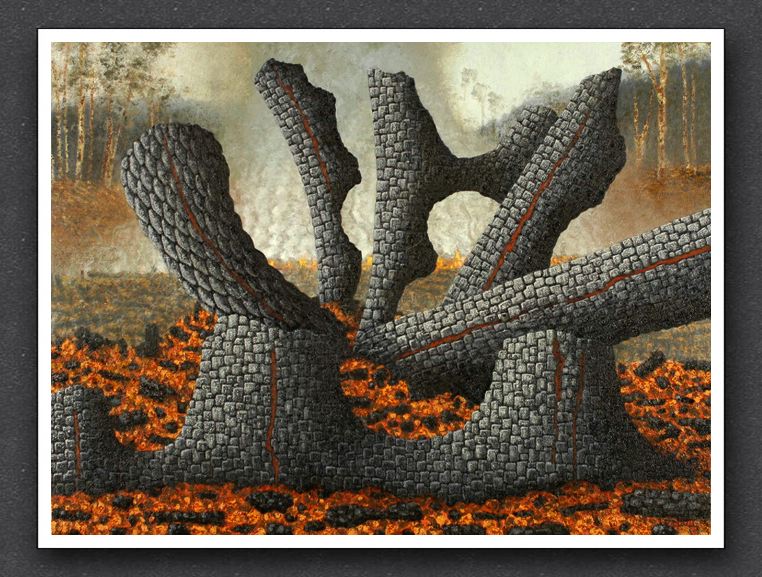 Richard Wastell, Then Tasmania can be a shining beacon, 2006
The image is from "We are making a new world" shown at the Bett Gallery, North Hobart in 2006, then at fortyfivedownstairs in Melbourne. Making a new world through the clear-felling of virgin Tasmanian forest is the Tasmanian way. Tasmania's old growth native forest continues to be levelled to the ground to produce wood-chips. After being industrially logged, what remains is napalmed from the air. What results are fires of intense ferocity.
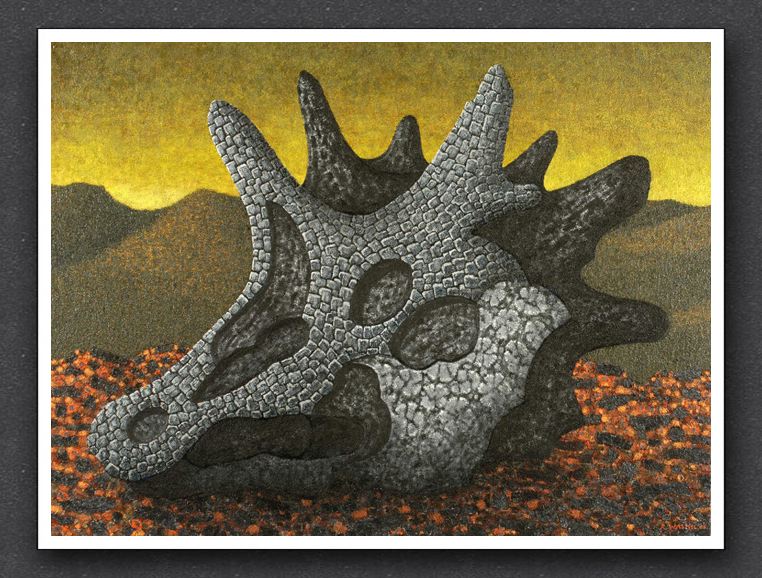 Richard Wastell, The wild beasts, 2006
Richard Flanagan, in opening the exhibition at the Brett Gallery,said that:
Into the plains of ash that are left are planted monocultural plantations, maintained by an intense regime of poisoning and fertilizing that has seen protected native animals killed in their hundreds of thousands, water supplies poisoned, and the spectre of a raft of illnesses draughting in the wake of these horrendous practices.To maintain such monstrosity, to evade the ever growing public anger, the woodchipping industry has had to exercise an ever stronger control over ever more aspects of Tasmanian life.
This is one example of the good work being produced by contemporary artists in Tasmania
|


