|
November 25, 2008
I watched a Criterion Collection DVD of Douglas Sirk's 1956 tragic Written on the Wind the other night. It was the first film I'd seen of his as I knew very little about him. I came across his name via the critics of Cahiers du Cinéma in Paris, when they were writing seriously about directors whose personal style transcended the rigors of the old Hollywood studio system and knew that he had been influential for Rainer Fassbinder and the new generation of American directors (Martin Scorsese, Quentin Tarantino and others).
All I knew about Sirk--was that there was a critical re-evaluation, in which his entire body of work had been rediscovered and reappraised by successive generations of filmmakers and historians.
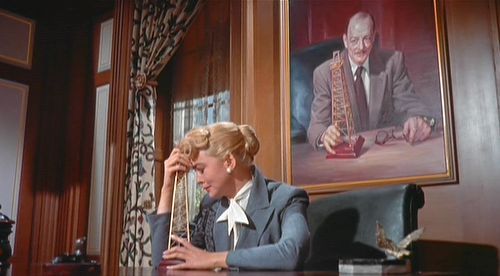
Written on the Wind was produced in an exaggerated Hollywood studio style with very stylish and richly saturated coloured interiors. It was visual excess with highly stylized performances that indicated a command of cinematic language ( the cinematographer was Russell Metty) over the seriousness of a plot, the acting, or the literary quality of the script about pent-up, unfulfilled sexuality, despair and hopelessness.
|


