|
December 10, 2008
Via page 291 I stumbled upon 1000 Words, an online photography magazine with its own blog. This increased presence of photography in a digital world is part of the turn to visuality that brings visual culture into the foreground.
From this digital perspective what Deleuze called the object of encounter is the anti-image tradition that set its face so resolutely against the image. The image in this tradition was seen as something so seductive and false that we needed to unmask and turn away from it. The pictures that lie in our language hold us captive. This object of encounter challenges out typical way of being in the world and disrupts our forms of thought.
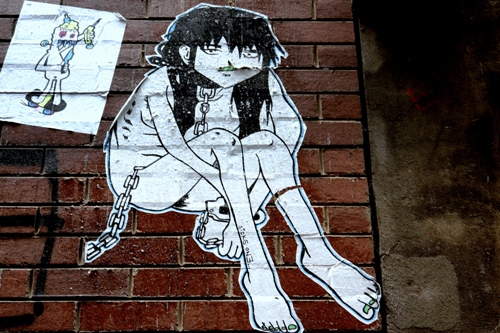 Gary Sauer-Thompson, Hosier Lane, Melbourne, 2008
The different streams in this anti-image tradition---eg., the ideology critique of mass culture; philosophy's antipathy to the image; the cultural dominance of linear writing --- seem to express a fear or anxiety about image that often results in traditional image destruction or the disfiguring of an image. The "pictorial turn" was seen as threatening traditional modes of knowledge, as behavior-threatening, and as an atavistic return to tribalism, irrationality, superstition, illiteracy. This is definitely seeing and thinking the world differently.
A classic example of this expression of anxiety is the 19th century literary and art hostility to the earlier pictorial turn based in photography and mechanical reproduction of images. A similar anxiety is happening with the digital shift and the computer processing of pictures.
There are a lot of prejudices that are built into people’s attitudes about visual culture, imaging, visual experience; as well as images and visuality becoming a specific point of irritation in contemporary theory, an unsolved problem or anomaly. The prejudices and anxiety are associated with being taken in --seduced---by an image.
This object of encounter forces us to think otherwise.
|


