|
March 11, 2009
Ed Ruscha's body of work, including his photographic books of the 1960s and 1970s, explored the American landscape especially the impassive iconography of the road by often he linking the verbal and the visual. Ruscha explores the place of words in our visual culture and the strangeness of the ordinary, asking us to look anew at the astonishing things we ignore on a daily basis.
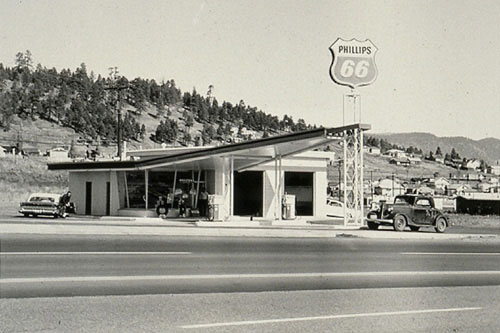 Ed Ruscha, Gasoline station, gas station on Route 66, From 'Twenty Six Gasoline Stations', 1962
Ruscha's 'Twenty Six Gasoline Stations' offered an alternative to the humanist concerns of the street photographers. The work was about things rather than about people; surface rather than soul; not the human drama of the street but the taken for granted backdrop of the built enviornment against which the drama plays out. Ruscha’s gasoline work influenced the New Topographics photographers who came to prominence in the mid-70’s.
His work subtly blend major artistic movements of the twentieth century, including Pop, Surrealism, and Minimalism, with the imagery and vocabulary of engrained west coast pop culture. Ruscha mounted a motor-driven 35mm camera on a car and drove up and down Sunset Boulevard in Los Angeles making the photographs that became his 1966 book Every Building on the Sunset Strip.
|


Gary, The Dell Gallery here at QUT is having a highway show soon . . .
more from the Director - s.wright@griffith.edu.au