|
March 2, 2009
Simon Norfolk---whom we have met here---- muses on photography's future in the context of the global financial crisis that has pulled the rug under their income and savings. He says that his advice is:
Get re-skilled. Keep your photographic aspirations but try to get a trade like film editing, web-design or accounting. Soon we’ll all be amateur photographers with real money-making jobs on the side that we don’t tell our colleagues about. We need to get over the snobbery attached to that. And we have to be tougher in our demands. Magazines online will be built by re-skilled photography lovers around business plans that don’t include paying wages to the photographers they ask to write. They pay salaries to each other, they pay the man who comes to fix the photocopier, but the "name" photographers they ask to contribute six hundred words get nothing. With business models like that, how can we survive?"
So professional photographer simply means earning a living from doing photography in the marketplace. Hence the contrast with amateur (doing it for fun ) and art photographer as another kind of professional photographer.
Norfolk's phrase "amateur photographers with real money-making jobs on the side "----that sounds like a good description of me. Amateur photographers who represent the effects of the global financial crisis:
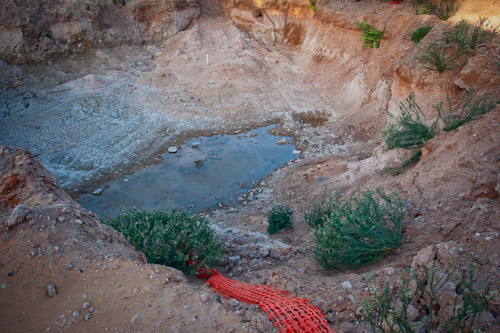 Gary Sauer-Thompson, stalled development, Adelaide CBD, 2009
The holes in the ground are everywhere in the Adelaide CBD----these are developments both commercial buildings and blocks of apartments or flats. The local media say they are stalled due to a hiccup in the market. The assume that the self-correcting nature of markets will ultimately prevail.
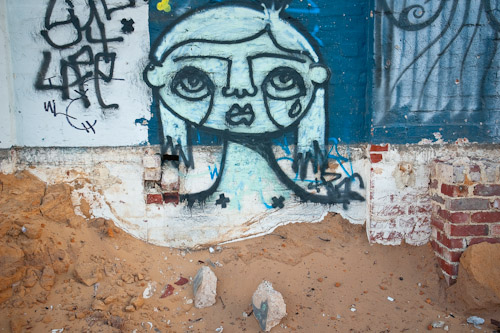 Gary Sauer-Thompson, street art, Waymouth Street, Adelaide, 2009
The reality is otherwise---all the holes in the ground. Despair slowly seeps in. The shadows cast by depression can be felt behind one as we walk the streets. This is happening just when this rustbelt city was getting back on its feet from the recession of the 1980s.
On the other hand, the globalised internet‐driven ‘future’ is here with its emerging global culture, enabled by an accessible technology, and it is scrambling old business models, even ideas of national identity, whilst at the same time creating new audiences and practitioners at home and abroad.
If the audience is online and anywhere, thenemerging artists are asking, legitimately, why are they seen in terms of government subsidy, rather than as the vanguard of the new digital economy. It is a good question. As Helen O'Neil says the economics of the creative industries mean that artists must learn to live in the world of productivity growth and the knowledge economy as well as the more familiar world of personal f enrichment and revitalisation.
|


Hey, that's what poets have been doing for generations! Finding a job that pays the bills so we can do the real work we are compelled to do by the little demons that crawl around under our skin.