|
April 7, 2010
I kinda like the idea of artists who generate images through the reproduction of other images. The appropriated image may be a film still, a photograph, a drawing; it is often itself already a reproduction. Often I appropriate other photographs in shop windows or advertisements.
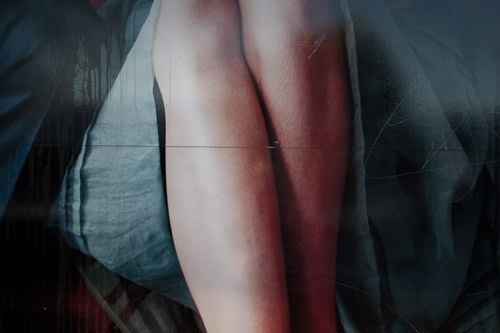
Allegory, for me is consistently attracted to the fragmentary, the imperfect, the incomplete---an affinity which finds its most comprehensive expression in the ruin. As an allegorical art photography would represent our desire to fix the transitory, the ephemeral, in a stable and stabilizing image.
In an allegorical structure one text or image is read through another, however fragmentary, intermittent, or chaotic their relationship may be----the paradigm for the allegorical work is the palimpsest.
Craig Owens in The Allegorical Impulse: Toward a Theory of Postmodernism in October, Vol. 12. (Spring, 1980), pp. 67-86 says:
Allegorical imagery is appropriated imagery; the allegorist does not invent images but confiscates them. He lays claim to the culturally significant, poses as its interpreter. And in his hands the image becomes something other (allos= other + agoreuei =to speak). He does not restore an original meaning that may have been lost or obscured; allegory is not hermeneutics. Rather, he adds another meaning to the image. If he adds, however, he does so only to replace: the allegorical meaning supplants an antecedent one; it is a supplement. This is why allegory is condemned, but it is also the source of its theoretical significance.
Owens connects allegory to appropriation, site specificity, impermanence, accumulation, discursivity, hybridization, and says that these diverse strategies characterize much of the art of the present and distinguish it from its modernist predecessors. They also form a whole when seen in relation to allegory, suggesting that postmodernist art may in fact be identified by a single, coherent impulse, and that criticism will remain incapable of accounting for that impulse as long as it continues to think of allegory as aesthetic error.
|


I really love your site! As I was reading this entry, it reminded me of the images I saw at the American Folk Art Museum here in NYC of some of Henry Darger's personal collection. I am fascinated by what he looked out at, which gives us another portal into his curious mind.
check it out:
http://www.folkartmuseum.org/index.php?p=folk&id=6172
Thanks again for your blog. When I do research for mine, you site often comes up!