|
September 7, 2010
In his "A Small History of Photography" in 1931 Walter Benjamin is still interested in the history of photography, which is to say in photography as a medium with its own traditions ie., ---- "the aesthetic discourse of photography, its institutions, its canons, its histories, its values, its investments, and its exclusions. In other words Benjamin assumes, rather than questions, photography's claim for the specificity of its own (technologically inflected) medium and he pictured the decay of the aura as a tendency---the destruction of an object's "aura" through its "reproducibility"---within photography's own history.
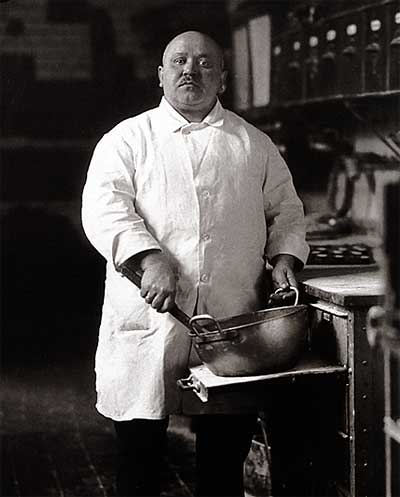
The point of Benjamin's "A Small History of Photography" is to welcome a contemporary return to the authenticity of photography's relation to the human subject after its collapse into artiness and pictorialism. This he sees occurring either in Soviet cinema's curiously intimate rendering of the anonymous subjects of a social collective or in August Sander's submission of the individual portrait to the archival pressures of serialisation.
Atget's response to the artiness of pictorialism is to pull the plug on the portrait altogether and to produce the urban setting voided of human presence, thereby substituting, for the turn-of-the-century portrait's unconscious mise-en-seine of class murder, an eerily emptied "scene of a crime.
The critical edge to photography was the medium's assault on "cult value" and aura. Benjamin's definition of this aura is most often derived from "The Work of Art in the Age of Mechanical Reproduction" essay in which "aura" is described in reference to natural objects as "the unique appearance of a distance, however close it may be." Related to Benjamin's preoccupations with both memory and history, the "aura" of cultural objects is commonly understood to refer to the traditional mystique of the work of art as singular and enduring. In the essay Benjamin announces the dismantlement of "aura" by the processes of mechanical reproduction that are able to replicate artworks into infinity. But he also seems to mourn its passing as one of the last vestiges of habits of naturalized memory.
And yet photography's own aura seems to reside in its apparent artlessness - its ability to appear to place us closer to an original object of desire precisely on the basis of its claims to a wondrous verisimilitude, its ability to form a "glass coffin" around those people and places most dear to us, to shelter a core of mortality (and here is the contradiction again), even as it leaves behind nothing but dead matter. Photography provides the treasured keepsake. It also provides the image in the newspaper, here today, gone tomorrow.
|


