|
October 7, 2010
Here is some confirmation of an earlier post on the unconscious hostility to photographers in public places. Rosemary Neill in The Australian says that art photographers are increasingly frustrated by a climate of regulation and suspicion that means spontaneous images in public spaces are becoming increasingly difficult to capture.
Rex Dupain, a Sydney photographer, said he has several times been approached by lifeguards or police at Bondi Beach when taking pictures, and has had his camera temporarily confiscated several times. He has abandoned his attempts to create an authentic visual record of contemporary Sydney beach culture:
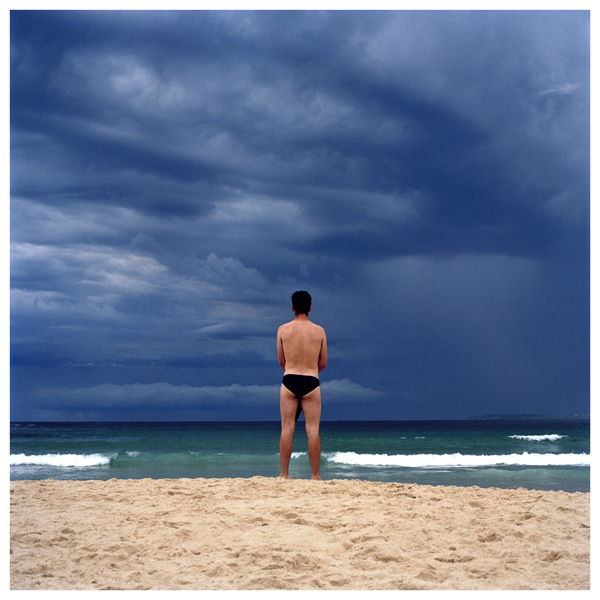 Rex Dupain, Coming storm, 2005, type C photograph, from Bondi Colour
Dupain says that a lone man with a camera these days is not a good look, even though in Australia, it is legal to photograph anyone on public land without permission, so long as the subject is not compromised (for example, getting undressed).
This technique -- pursued for decades by masters of street photography including Henri Cartier-Bresson, Robert Doisneau and Robert Capa -- was also Dupain's modus operandi. Dupain says he encountered so much hostility from the public, lifesavers and the police, he quietly stopped taking unrehearsed photographs at Bondi months ago.
The usual reasons for the antagonism stems from public anxiety and paranoia (a moral panic) about pedophiles but it goes deeper than that anxiety about childhood sexuality and pornography that came to the fore around the Henson case two years ago. There is the emergence of anti-terrorist legislation-- it is assumed that as terrorists use photography to plan an attack, photographers who are following the letter of the law are harassed by security and/or police for photographing our transportation infrastructure and buildings. And there is in Australia the emergence of an extensive regime of censorship and suspicion that reinforces entrenched ideas about the need to control images.
Neil comments:
It is ironic that photographers feel under siege when voyeurism has been turned into a national pastime. Witness the enduring popularity of reality television, the celebrities who tweet compulsively about the most mundane details of their lives and ordinary individuals who post dozens of photographs of themselves on Facebook. Our multimedia society is arguably the most narcissistic and (superficially) self-revealing in history.Yet, paradoxically, the rise of online and mobile media has also bred mistrust of professional photography and has entrenched ideas about the need to control images -- and who makes money from them -- whether the subject be a private citizen or a well-known landmark.
The result is an erosion of the photographers' rights to freedom of expression. All three levels of government--federal, state and local--are involved.
|


