|
November 30, 2010
Jan Tove is a Swedish photographer (b. 1958) who was originally trained as a portrait photographer and educated as a film photographer but ended up working as a reporter for Borås Tidning, Sweden’s main daily newspaper. He worked there from the age of 28 to 34, became a full time professional photographer a few years latter, then started using a large format camera in the 1990s.
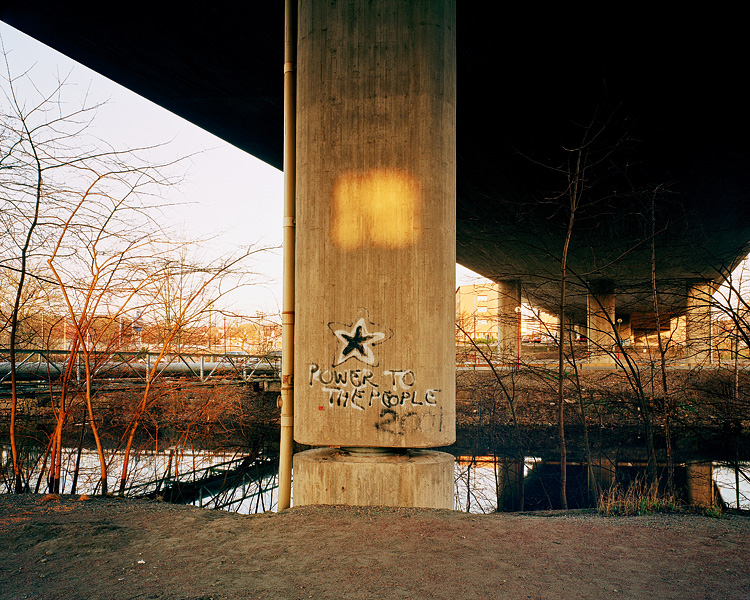 Jan Tove, Boras 2003, C-print, from the Riverside series
I know very little about Jan Tove or Swedish photography. There is not much on the web either. Tove's photography has moved from a concern with the natural beauty of the landscape to the social landscape.
Contemporary art is still impacted by a sense of the loss of aesthetic dominance in the wake of conceptualism, yet at the same time, its so-called anti- aesthetic dimension contains no independent dimension outside of the sphere of aesthetics. Aesthetics here usually means beauty--and we find it in landscape photography.
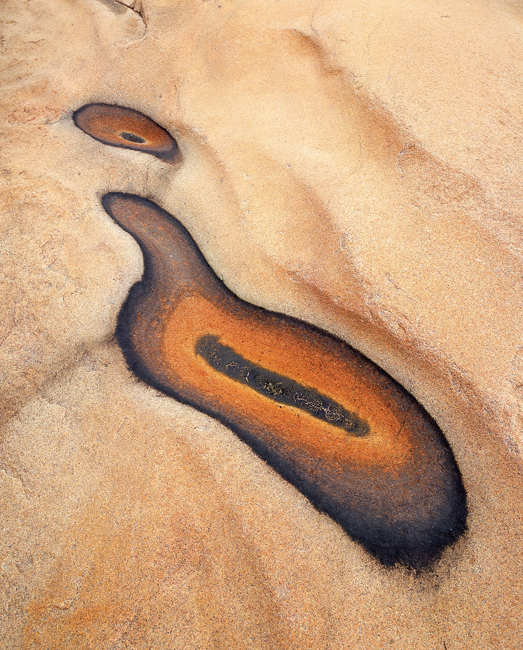 Jamn Tove, granite ponds, Archival Pigment Print, from Beyond order
Some argue that it is also important to retrieve some of that which was lost within conceptualism and postmodernism’s assault upon modernism; and that this retrieval presents us with the task of balancing the history of modernist aesthetics with the cultural theories that defined poststructuralist discourse. Though it is not possible to occupy the past with any authenticity, we can return to unfinished projects or reapply old ideas to new contexts.
Is this what are finding with the new topographics movement?
|


