|
July 20, 2011
Janelle Lynch made a series of intriguing projects or series during her three-year stay in Mexico City between 2002-2005. The first one was El Jardín de Juegos, which was made with a ×5 inch camera, with the pictures devoid of people. It shows the relics of a children’s playground conquered by nature and neglect.
Another Mexico series is Donde Andaba and this appeals to me as it connects with my urban nature work in Adelaide:
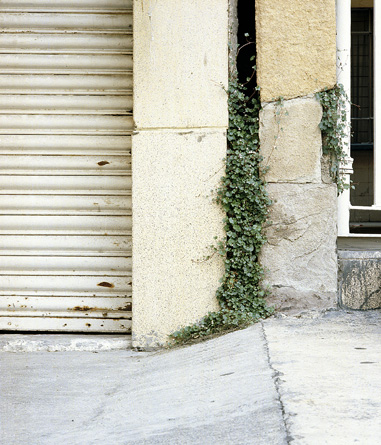 Janelle Lynch, untitled, 2002-05, from Donde Andaba series Lynch says that the Donde Andaba series, which was made with a 6x7cm format camera, explores:
the streets of my neighborhood, La Condesa, and in a nearby park and playground. Using wild plant life juxtaposed with urban architecture as a vehicle, the photographs explore the theme of the persistence of life and growth despite its environmental conditions.
Her first monograph, Los Jardines de México (Radius Books), explore themes related to the life cycle and representations thereof in the urban and rural landscape.
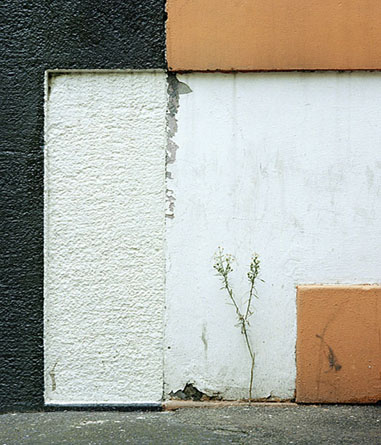 Janelle Lynch, untitled, 2002-05, from Donde Andaba series The book is comprised of four series––three from Mexico City and one (Anka) from Chiapas. The latter, made with 8×10 inch camera, are portraits of anthropomorphized tree stumps in a nature reserve, which investigate the theme of regeneration.
|


