|
October 18, 2011
In previous posts on the Docklands in Melbourne I mentioned that the public spaces where one could relax and escape the noise and traffic of the city were few and far between.
My view from my experience of walking around this urban space was that, rather than the Docklands precinct being on the cusp of becoming a vital and dynamic urban space, it appeared that it---basically a successful business park-- is becoming a giant lifeless wasteland.
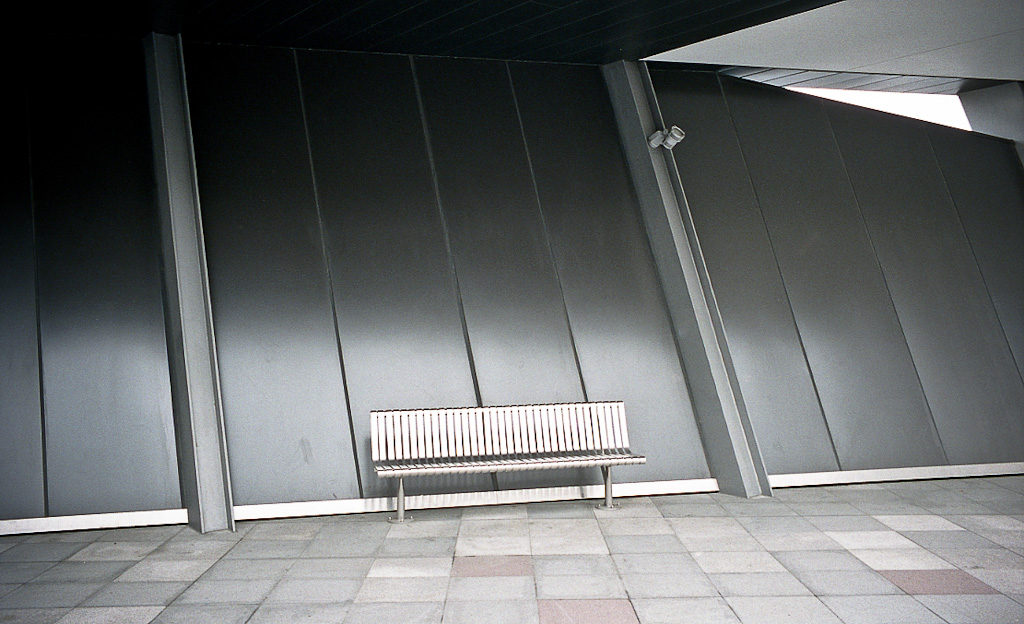 Gary Sauer-Thompson, seat, Docklands
In Locals ignored as Docklands development treads a familiar path in The Age Heike Rahmann refers to the design or development tradition of the First Decade: massive scale, disconnection from the water, and general disregard of the local context. In other words: quantity, not quality; a form of development in which public access to the water, the acknowledgement of local qualities and community needs have been neglected and utterly compromised by corporate developments.
The development of Docklands means that Melbourne's traditional CBD has been expanded. There is a lot of banal corporate tinted glass tower architecture.
Rahmann adds:
Melbourne claims to be the "design capital of Australia" but paradoxically there is little discussion about urban design. So far, discussion of urban design seems completely absent in the Docklands. We could blame developers for this lack of vision but complaints will most likely remain unheard. Real action and positive change only occurs where policy embraces design as a strategy for urban revitalisation.
She says that what has been missing in the discussion about transformation strategies for Docklands is urban design. I would add urban design about public spaces. What design there has been is that of the developers constructing their high rise office and apartment buildings in isolation.
Update
The Melbourne Urbanist comments:
the development process was conceived like a mine – extract as much value as possible from the sale phase and get out. It’s as if each development was set up as a self-contained project with no one having any incentive to think about what they meant as a whole or to care about the quality of the public space that connects them. I don’t blame any individuals or even the responsible agency. I think it goes right back to what the State Government of the day wanted from the project – revenue. They set up the management arrangements for the development to reflect that goal.
It's a giant business park. It's bike friendly due to the lack of cars.
|


Rather than extend the grid and grunge of real Melbourne into its Docklands redevelopment, Melbourne has chosen instead to emulate Sydney's crass Darling Harbour.
Melbourne has also loosened controls on out-of-town development on the fringe of the city. Apparently inner-city density is bad for us