|
October 25, 2011
It rained so constantly in Melbourne on Monday that I gave up photography and retreated to the State Library of Victoria to check out the exhibition of "modernist" Melbourne Photographers.
Entitled As modern as tomorrow it explored post war photography in Melbourne created by immigrant photographers from abroad, who became active in commercial fields as varied as fashion, advertising, architectural and industrial photography:
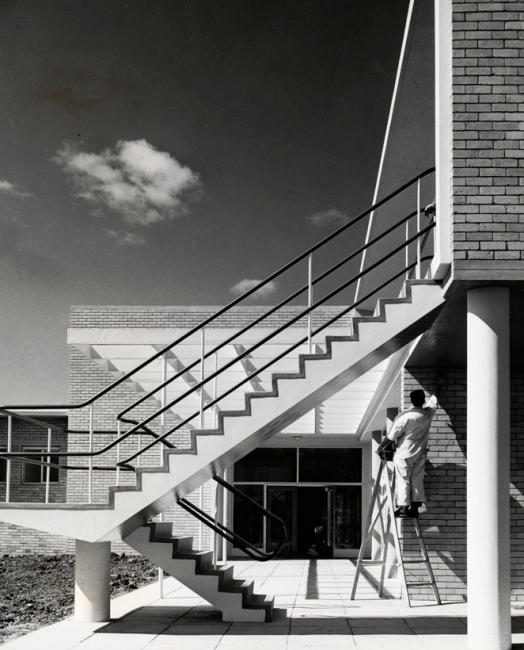 Helmut Newton, amenities block, circa 1951-54
It is largely Melbourne in black and white with some (early) colour work that looked dated. I thought that the architectural work was the strongest in a modernist celebration of Australian modernity; a modernism that largely excluded everything else around the building, eg., the work of Max Dupain and Harry Seidler.
Wolfgang Sievers not only understood the ambitions of modern architecture but he was in command of a modernist photographic vocabulary that aimed to reveal facts about the constructed world, it left behind the aesthetic of the pictorialists who tried to achieve painterly effects in their work. Modernist photography’s hallmarks were sharp focus, purposeful lighting, emphatic viewpoints and detailed close-ups.
It's not surprising that the work is a celebration because it was commissioned so as to become the iconic image of the building.
|


