|
February 27, 2012
Donna MF Brett in The Uncanny Return: Documenting place in post-war German photography in Photographies (no. 3, Issue 1, 2010) says that in the late 1970s Düsseldorf-based photographer Thomas Struth began an ongoing series photographing the urban landscape, exploring, in particular, cities in West Germany and in the former East Germany, recording places in which, to a certain extent time had perceivably stood still.
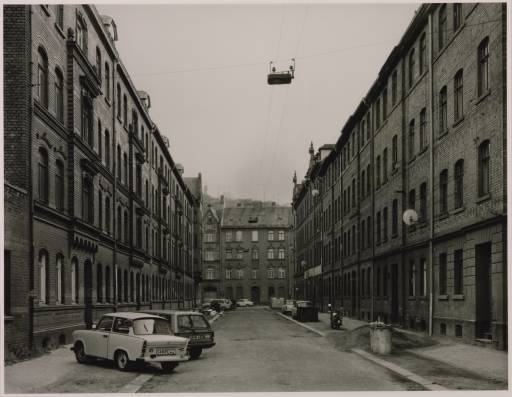 Thomas Struth, Hermannsgarten, Weissenfels, 1991
Brett says of Struth's Berlin street photographs that:
His interest in photographing the post-war German landscape was in exploring the relationship of the individual to historical time and in analysing urban structures in terms of all that has come since the Holocaust and as a witness to the emblematic structure of post-war German cities... His series of empty, almost anonymous streets, which he has referred to as “unconscious places”, render the street as void yet present the void as a concrete visual experience.
Struth’s typological repetition of vacant streets becomes the images of our half-awakened wanderings and memories of streets once known, familiar but strange, or of streets we encounter in glimpses as we lose our way.
The multiple layers of traces reflect the various histories that are marked through time, by lives lived, centuries of building, destruction and loss.
|


