|
May 3, 2012
The precious Kodak moments and memories of yesteryear are now being captured with an iPhone or an Android phone, then uploaded to the computer or to Instagram. At the heart of Kodak’s tragic demise is the digital camera, a technology invented by Kodak in the 1970s, only to be ignored by its creators and championed by its rivals.
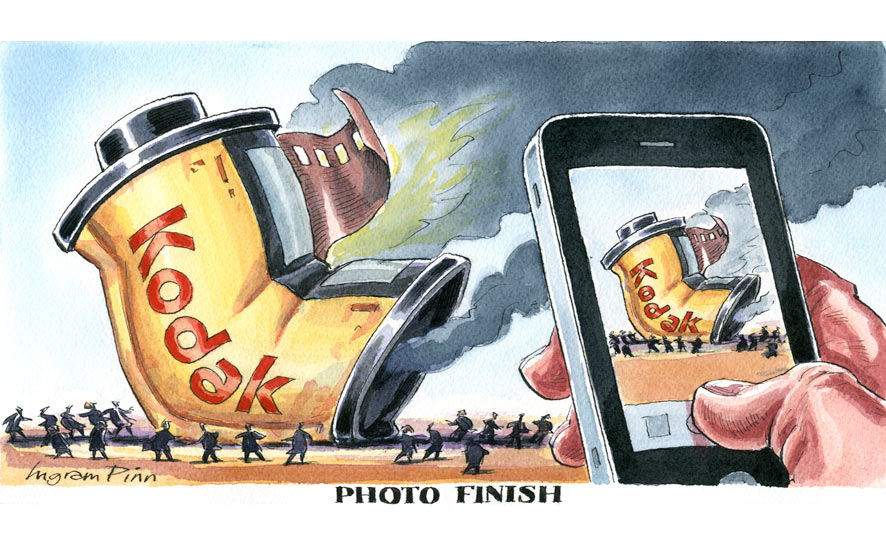
The smart phone is rapidly replacing the small point and shoot digital cameras. Sales of the point and shoot camera are in decline, not because people are taking less photographs, but because of the rapidly improving cameras in the smart phones. Image capturing quality is now a key consideration in the engineering process of new smartphones as is their integration into network technology.
I've started using an old feature phone Blackberry Bold on my poodlewalks. It replaced an old cameraless Nokia, but it is not a computing device--its a voice-oriented phone--- and it only allows me to upload photos to Windows-based PC's. Several years ago Microsoft ruled the computer world and especially the corporate world.
I understand that the current market disruption in the telco market is the migration of a large number of demanding customers away from phones-as-voice-products to phones-as-computing-products. Mobile computing is where the market has shifted. The Blackberry (Research in Motion) has failed to make the shift and there is now a question mark over their independence--can they develop the software and the ecosystem to ensure that a Blackberry (a feature phone) can become a mobile computer?
At the moment its existing handsets are not competitive. Hence the need for a turnaround to mobile computing.
|


