|
March 2, 2008
It was raining in Sydney this morning so I had to delay my explorations or wanderings of Newton until mid-morning when the rains had cleared. I caught the train from Mascot to central, then to Newton and walked up and down both sides of King Street---the main drag---having a look.
It initially reminded me of Brunswick Street in Melbourne---an old, grungy, inner city, white Anglo-working class suburb going funky from being peopled by students, artists and gays. It had that similar "counterculture' buzz and zing, which is what Adelaide really lacks.
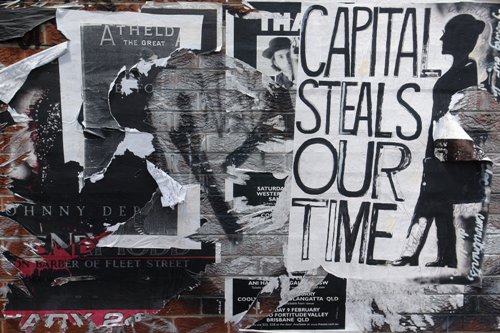
I was searching for May Lane to see the latest exhibition of street art. But I was doing so without knowing where May Lane was. I had decided to work blind as a good situationist. I would either stumble upon the lane, or be directed by the locals where to go. This is called dérive (or ‘drifting’, which is understood as, 'A mode of experimental behaviour linked to the conditions of urban society: a technique of transient passage through varied ambiences’).
Why street art and visual culture rather than exploring the literary bookshops that embody a literary culture? Paul Davies in his The Decline of the Literary Paradigm in Australian Publishing (accessed through Michael Christies' excellent Eurhythmania weblog) gives a plausible answer:
Literature once had a special role to play in advocating such [cultural] values. Since the nineteenth century, the coterie elites that literary cultures nurtured have produced leading public intellectuals, a founding duty of literature having been, after all, to ‘heal nations’ and save their citizens from the worst excesses of capital... Such figures continue to exist but in most cases they are unrepresentative and have no truly popular sway.
Davis adds that attempts to resurrect their prestige and that of the literary-intellectual culture that sustained them, in anthologies of essays and new magazines and in ritualistic attempts to talk the literary novel back into cultural prominence, are ever more unconvincing.
Quite simply, there can be no going back, because the cultural nationalist, protectionist moment is over. The problem is not merely literary– it is one of founding a genuinely popular critique of neo-liberal marketisation, even as the traditional intellectual bases from which such critiques spring, including literary culture, have been sidelined.
Can a visual culture help to develop a popular critique of neo-liberal marketisation? If so, then can photography help do this? If so in what way?
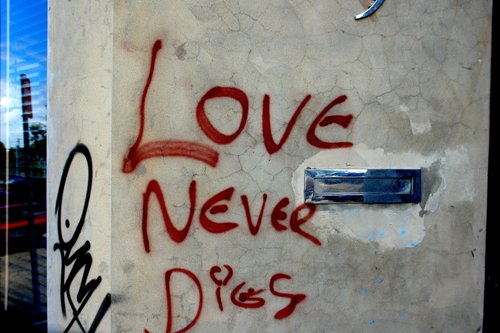 Gary Sauer-Thompson, love, Newtown, Sydney, 2008
That is what I was exploring as I stepped of the train at Newton station and started my explorations along King Street. The above images are crude but they do indicate an ethos of critique in a neo-liberal world.
|


Gary,
these images would not be seen as good photography by the art institution or even as popular by the Flickr culture.