|
January 7, 2009
s2art's Flickr stream has a set entitled neo-documentary aka... In the notes describing the ethos of this interesting body of work s2art provides a map of the art institution in Australia in the 1980s. He says that:
In the 1980s in the Australian art scene, there was a lot of photo-art that was being made that questioned the documentary nature of photography, one of the techniques used to do this was titles, another to COMPLETELY stage the shot as well.
We can add to this tmap of changes in the art institution by introducing the questioning of high modernism (formalism) in the Australian art scene. Place is a key here, as it signifies a return to everyday life. Photography is an ideal medium in which to examine the importance of place (or the pain of being without place), partly because it works well within a DIY aesthetic.
So how did photography question the hegemony of late modernism?
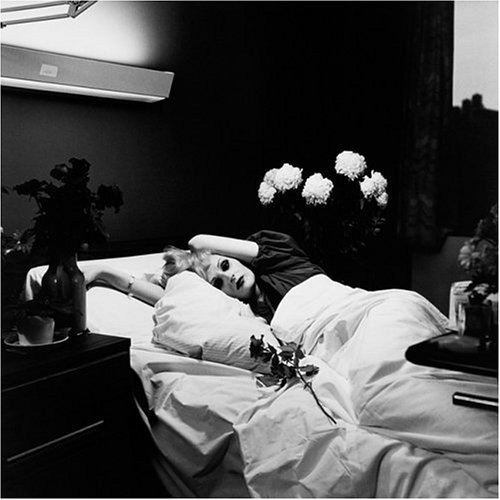 Peter Hujar, Candy Darling on her deathbed,1974. Vintage gelatin silver print.
One way of transgressing modernism was to reject its idea of popular culture as kitsch, spin off from pop art and Warhol, step into popular culture, and question its codes and practices. The critical current in the late 1970s and early 1980s was punk that coincided with serious economic recession, mass unemployment, the tail end of an unpopular Labour government, strikes and industrial disputes, a sense of national decline and a demand for change.
Punk was an explosive movement in popular culture and it was influenced by those alternative currents in modernism----Dadaist, Futurist, Surrealist and Situationist--- that have a minor presence in Australia. It caused in moral outrage and tabloid disgust amongst cultural conservatives. The punk movement is most commonly explained in terms of music (Sex Pistols ) and style (torn jeans and razor blades), but it was also rooted in performance, installation art, photography, graffiti, collage, graphic design and assemblage. It
A visual account of the artwork surrounding the ’70s punk scene is Panic Attack! Art in the Punk Years (curated by Mark Sladen and Ariella Yedgar). The curators say that punk can be interpreted around four central themes:
art with overt political intent that uses the inner city as a symbol of social breakdown; the body as a site to explore transgressive ideas of sexuality, violence and abjection; do-it-yourself aesthetics, collage and appropriation as alternative means of visual communication; and the underground scene as a radical social space and ground for artistic cross-fertilization.
In one of the essays in Panic Attack!: Art in the Punk Years ---- "Post-Conceptual Photography and Strategies of Dissent,"--- David Bussel contends that is a medium that can be used actively, rather than "a supposedly neutral form of documentation". He states that:
the artists broke away from the imperatives of Conceptual and Minimalist art to claim a new ground—the politics of representation—through the redefinition of photography and its potential "uses" for socially engaged, critical intervention. This intervention . . . shifted the terrain of activity for many artists from an "aesthetics of administration" to aesthetic politics as part of a larger shift in the very terms of cultural production itself within the Postmodern condition
The politics of representation—through the redefinition of photography and its potential "uses" for socially engaged, critical intervention still reverberates. Edgy, wilfully controversial, and directly political photography based on resistance from within a deserted urban wasteland that expressed unrest, urban decay, protest, self-reinvention. The imagery of urban decay was often used as a symbol of the public crisis.
|


In the late seventies and early eighties, Peter Hujar (1934–1987) roamed the no-man's-lands of downtown New York after-hours: an empty corner of Leroy Street (now home to Federal Express and just down the block from Gavin Brown's gallery), the silent meatpacking district, seedy swaths of the waterfront known only to cruisers like himself. He also turned his camera on fellow nightcrawlers, from his lover David Wojnarowicz to the girl he found slumped in his hallway.
Hujar’s more formal studio portraits of Susan Sontag, Candy Darling, and other bohemian cohorts inspired Nan Goldin and Robert Mapplethorpe, but his contribution to the subgenre of New York street photography that consists of night shots—long dominated by the more sensational Weegee—is only beginning to emerge. Today, as the cobblestones teem with tourists and Wall Streeters, Hujar’s nocturnal city looks improbably desolate, like the long-exposure streetscapes of the earliest photographers.