|
July 21, 2010
I have been drawn towards derelict and abandoned buildings. This is not just because they contain the promise of the unexpected, but because they offer an insight into the production of spaces of ruination and dereliction are an inevitable result of capitalist development, the relentless search for profit and economic crises.
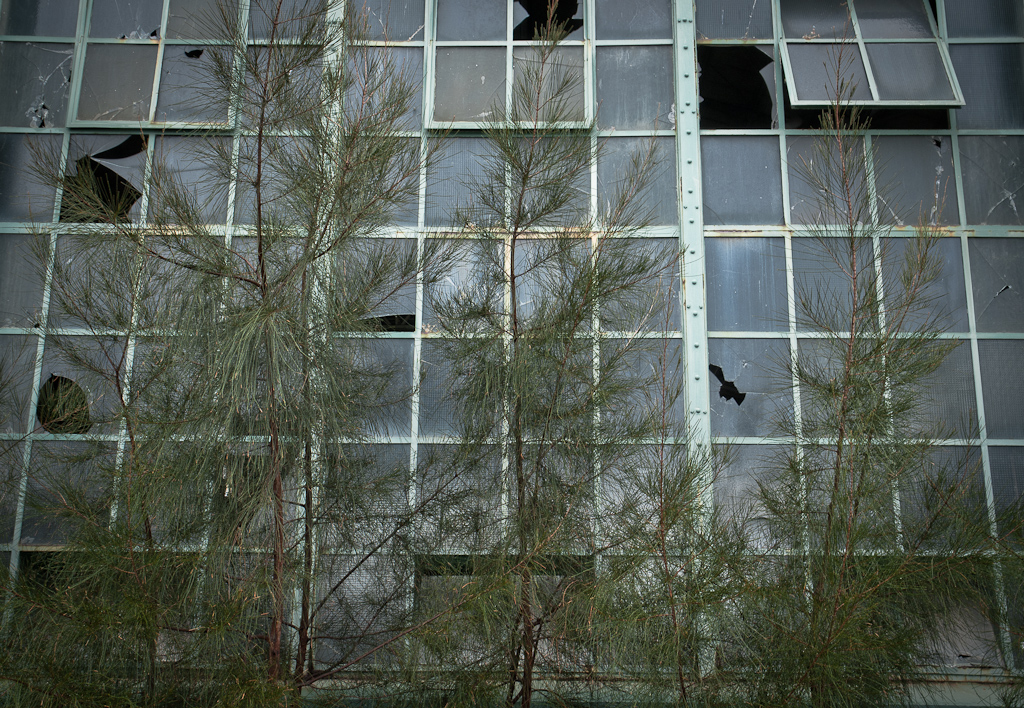 Gary Sauer-Thompson, James Hardie, Port Adelaide, 2010
Some are left to linger and decay for decades, turning into heaps of rubble over the years, whilst others stay for a while until the first signs of decay take hold and then are demolished, and some are eradicated shortly after abandonment.
At present, there are not as many ruins as there were during the 1980s when landscapes of industrial ruination dominated whole areas of cities, as swathes of manufacturing suddenly became obsolete under economic restructuring.
The conventional reading of ruins as spaces of waste is that they contain nothing, or nothing of value, and that they are saturated with negativity as spaces of danger, delinquency, ugliness and disorder. Local politicians and entrepreneurs see the urban landscape of dereliction and ruin as a sign of waste: ruins, for them, signify a vanished prosperity as formerly productive spaces become rubbish and are no longer of any use.
For them neglected land not only looks depressing. It also tends to attract fly tipping, graffiti and fly posting, all of which “uglify” the environment’. Derelict land is identified with crime and ‘deviancy’.
I also see these spaces of waste as spaces of play for children and adults.
|


The romantic aesthetic emphasised the picturesque (such representations should stress ‘variety and contrast of forms, lively light and dark interplay, rough textures, and above all, rather busy foregrounds with assorted irregular trees or rambling shrubbery in one or both corners of the picture, between which a few figures and/or animals appear); and the sublime (eg., stormy clouds and looming edifices depicting the requisite atmosphere of awe, or with an apprehension of the magical forces that remain unseen).