|
September 1, 2012
Refractions: Contemporary Urban Photography is an magazine on, and of, the urban environment, which is published in Melbourne. It can be viewed here. (It's a slow download). The pictures have been selected from the archives of the Flickr group--Urban Photo Publishing. There is an associated blog.
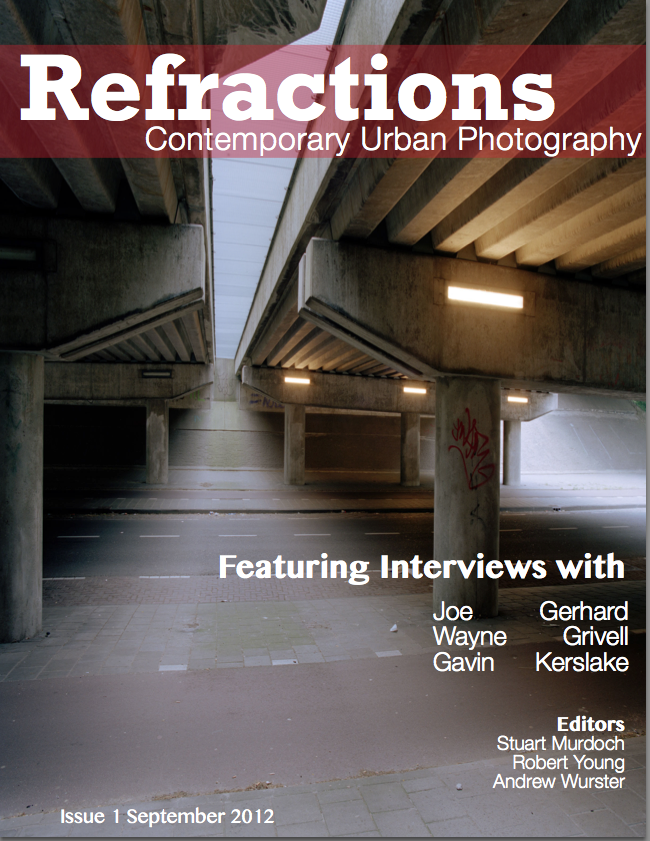
In the editorial Stuart Murdoch rejects the traditional modernist emphasis on the single image in favour of viewing photographs in the context of a body of work. He says that:
Historically in the art world, context was usually a printed exhibition, sometimes a book, or a photo essay, today an advertising campaign would be the commercial aspect of context.The internet and digital media has blown some parts this idea out of the water. The idea of context is lost on many people on the web, in fact the web changes this context extensively. To make interesting engaging work in the space that is cyber space, is at best difficult, at worst impossible to do, and to keep doing for any established amount of time unknown of... yet?
Murdoch asks, 'Is scrolling or swiping on a screen as an engaging experience as walking along a row of walls painted white, where the distance between images for some artists needs to be measured in millimeters?'
His response is that this question is still unanswered, but he refers us to Marvin Heiferman (ed.) Photography Changes Everything and Codex magazine. The latter is a collaborative graphic and textual website that employs a group of editors from across the globe, who post work and respond to each other’s posts, using primarily photographic fodder with minimal text, as well as graphic images, memes, gifs etc.
This collaborative approach to photography exemplified by Refractions is part of the commons in the public sphere. It stands in opposition to the corporate control of images through establishing various tollgates to the electronic reproduction rights on the information superhighway, and it provides a way for urban photographers to create a different history outside of the global supermarket of digital images.
This opens up a different set of concerns to those around the potential and actual impact of computing on the practice of photography, which many academics consider to be a turning point in photography's history.
|


