|
October 23, 2012
Lyle Rexer in The Edge of Vision: The Rise of Abstraction in Photography makes some interesting remarks about photographic abstraction.
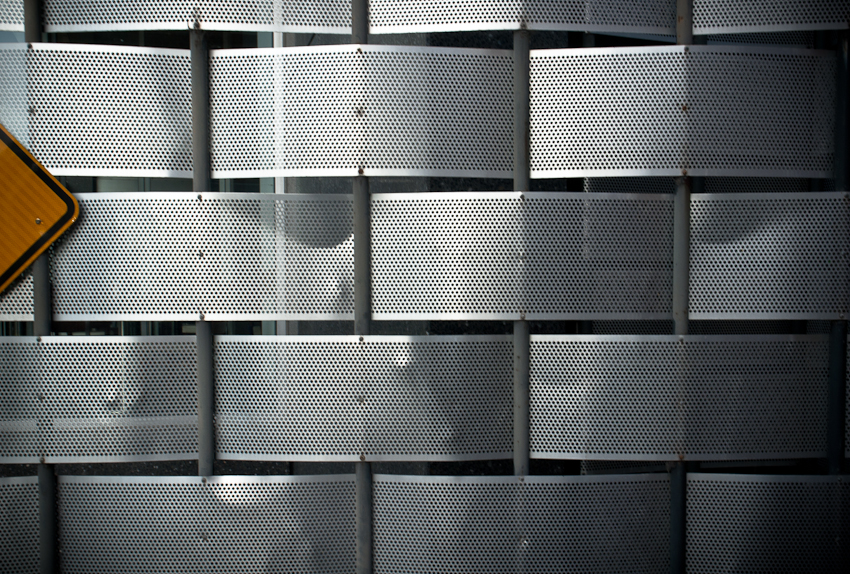 Gary Sauer-Thompson, steel grill, Adelaide
Rexer says that:
The definitions usually offered of abstraction in art (principally painting and sculpture) are tendentious; that is, they attempt to demonstrate that all art in a period defined as prior or premodern leads up to the disappearance of representation from the image, and more than that, that a particular form of abstraction posses the character of historical necessity. Among artists in the twentieth century, each approach promised to vanquish all other false, partial or mistaken directions. This rhetoric of liberation, purification, culmination, and transcendence is cognate with the notion of avant-gardes generally and the Hegelian idea of history it embodies.
Rexer is referring to the Cubists, Futurists, Neoplasticists, abstract expressionists, Minimalists and modernist art critics such as Clement Greenberg and Michael Fried. The end of the line in art's modernist evolution is the black paintings of Art Reinhardt.
He argues that we should look at abstract photography differently.
|


