|
October 29, 2013
Over the last decade Donovan Wylie has been representing the surveillance and control architecture of the UK warfare state in Afghanistan. If one considers modern warfare as being also highly technological, what is striking in the images of these outposts is the archaic character of these small forts lost in a stony landscape. These are like lunar images in which no enemy is visible.
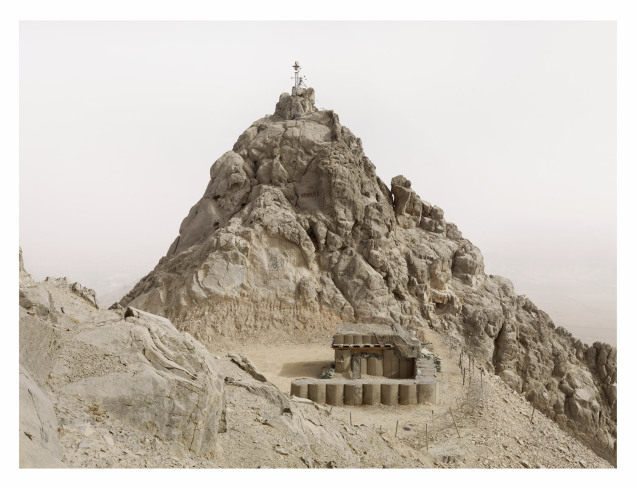 Donovan Wylie, Observation Post, FOB Ma sum Ghar, Kandahar Province, Afghanistan, 2011
Since the U.S.-led invasion of Afghanistan in the fall of 2001, NATO and Afghan troops have relied on outposts, tiny bases erected in some of the least hospitable terrain to ever see combat. The outposts are places of refuge; the troops sleep, fight and sometimes live behind their makeshift walls. Ihe first war of the 21st century was waged with the most sophisticated weaponry, these were often utilized from fortifications that have changed little throughout the centuries.
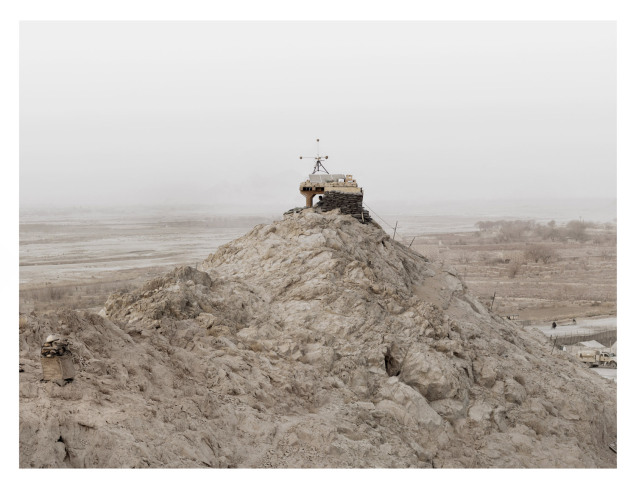 Donovan Wylie, Observation Post, location unknown, Kandahar Province, Afghanistan, 2011.
Because of their temporary construction, these outposts aren’t likely to survive, as Hadrian’s Wall and Masada, which beckon visitors as remnants of ancient war.
Wylie's images are presented in a very consistent way – low contrast, subdued colour, sharp from foreground to background, fairly central horizons and often includes human figures with heavy machine guns and armoured vehicles. The brown Afghan dust drapes over everything and the appearance of any other colour is relatively rare.
|


