|
July 15, 2014
Photography--snapshot or documentary---can provide us with traces of history even though this visual language is often mobilized to sell us commodities, wealthy lifestyles and fashion as art.
An example is the Caspian work by Chloe Dewe Mathews, a British photographer, who, in 2010, hitchhiked for nine months from China to Britain. The series focuses on the sanatorium town of Naftalan, Azerbaijan, where people bathe in local crude oil to treat a range of ailments; and on a group of Uzbek migrant workers, who are building increasingly elaborate tombs for the new oil-rich middle class in Kazakhstan.
Prior to the oil boom the Caspian was a holiday area during the Soviet era. An ecological scar caused by the oil boom around the Caspian, that large inland sea that lies between Europe and Asia.

Chloe Dewe Mathews, from the series Caspian
The traces of history form of representation starts from an acknowledgment of the relationship between the past and the present. The problem that arises is how do you represent, how do you fix, how do you photograph what is always changing when the very moment you grasp it, it’s already becoming something else, it’s already something else?
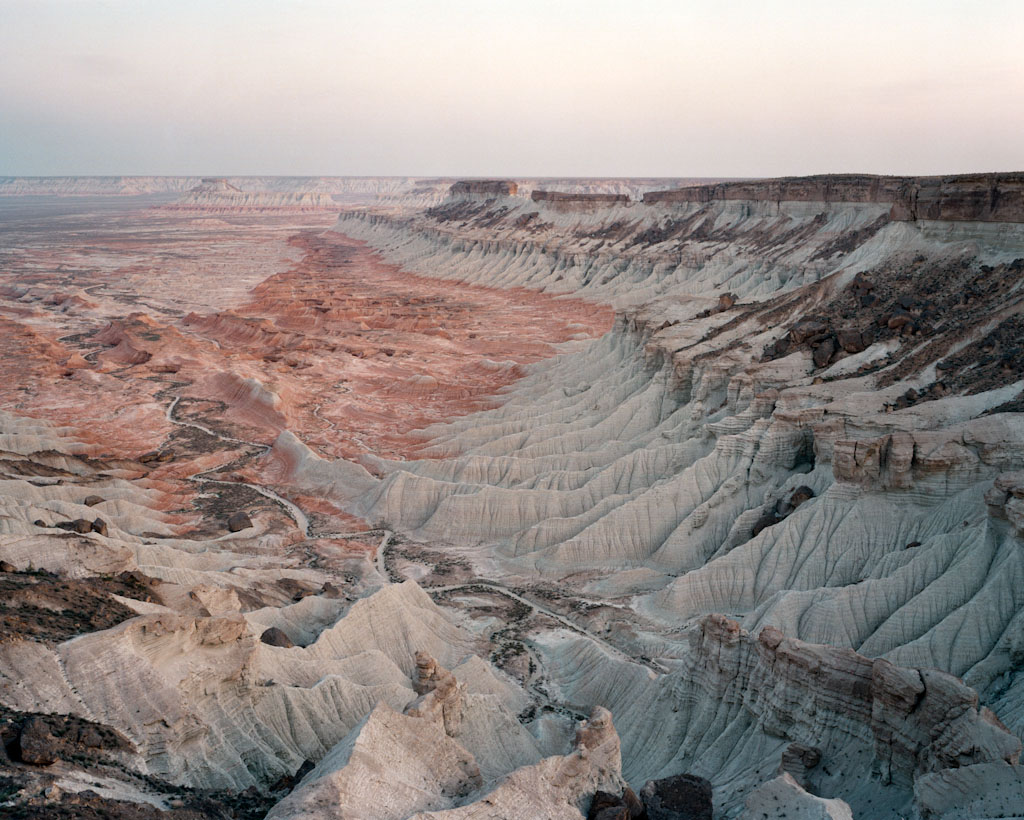 Chloe Dewe Mathews, from the series Caspian
What is presented is a trace by a visual language that is language is embedded in tradition. Consequently, the language is never just ours.
|


