|
January 29, 2014
Brenda L Croft, of the Gurindji people, has been exhibiting since the mid-1980s. Brenda Croft captured the emergence of a new wave of community activists in Redfern in the early 1990s. Her career later shifted focus and she went on to become senior curator of Indigenous art at the National Gallery of Australia. Born in Perth in 1964, and having lived in many parts of Australia and overseas, she now lives and works on the South Coast of NSW.
Her work questions stereotypical descriptions of the relations between Indigenous and non-Indigenous people,
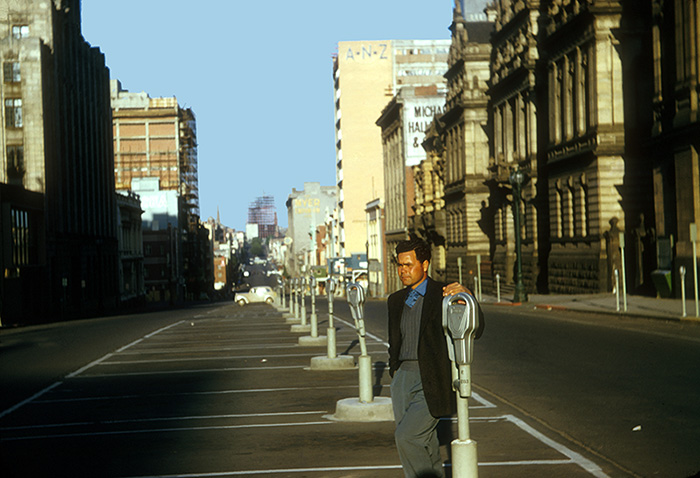 Brenda L Croft, Man about Town, 2003, from the exhibition Man About Town, Giclee print on rag paper 1960s Perth, prior to the national Referendum of 1967 was a place where Aboriginal people lived under the restrictions enforced by authorities of the day: Pass laws, or 'Dog Tags', city boundary restrictions, fringe camps, and removal of children from their families. At the same time new arrivals to the state from around the world were 'greeted/accepted' in diverse ways, depending on their country of origin.
In a formal sense Croft often uses the layering of text and image. The 1998 exhibition In My Fathers House included a series of multi-layered coloured photographs juxtaposed with text. Each picture pulls together family memories from members of the Stolen Generation – one of whom was Croft’s Aboriginal father. layering of text and image.
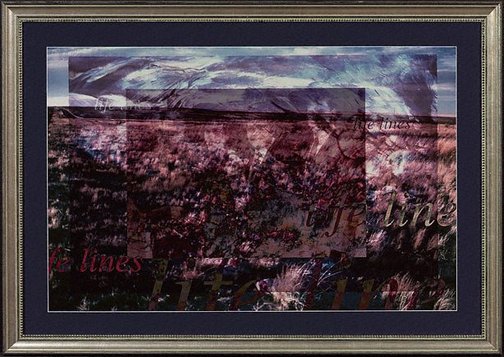 Brenda L Croft, Lifelines, from the series In my father's house, 1998, colour ilfachrome photograph In this series, Croft juxtaposes religious imagery, language and family photos to comment on her experience of growing up in the suburbs with a white mother and an Aboriginal father who was taken from his family at less than two years of age under the government policy that allowed the removal of Aboriginal children from their parents.
Growing up in institutions, often with religious affiliations, with little or no knowledge of their parents and culture, these children are now known as the 'Stolen Generations'. The constructed layers of memory in Croft's work reflect the fragmented lives of these children and the ongoing effects of this through generations as families reconnect.
|


