|
August 11, 2014
It's SALA Festival time in Adelaide.
The annual SALA Festival is a state wide celebration and promotion of the diverse talents of South Australian Living Artists. There are hundreds of exhibitions across the state--too many for one person to see.
One exhibition that I have managed to see is the Everyday Memories one at the Light Gallery, run by the Centre of Creative Photography (CCP). This is an exhibition of black and white photographs of the ordinary and commonplace in South Australia's rural and urban landscapes by Louisa Cowling-Tziros (landscapes), Rosalie Wodecki (Cheetham salt fields) and Victor Wodecki (architecture).
It stands out from the deluge of colour images on social media, with their apparent loss of the referent amid a postmodern (Baudrillard) hall of mirrors. The hall of mirrors metaphor rejects the view that photographs are mirrors with memories and states that a postmodern representation inevitably succumbs to a depthlessness of the simulacrum, or that it gives up on truth to wallow in the undecidabilities of representation.
The series in the exhibition that intrigued me was Victor Wodecki documentary photographs of the old suburban buildings and corner shops. This is informed by, and tied to, historical memory, and it establishes a link between Australian history, public memory and personal experience. It reminds me of the work of Richard Stringer in Brisbane.
This is a documentary photography with an intimate eye on Adelaide's urban history whose present is marked by the closing of many small businesses after the global financial crisis. Wodecki's picture below of a shop in Holbrooks Road in Adelaide's western suburbs is a good example of the process of historical reconstruction and photography's relationship to historical meaning.
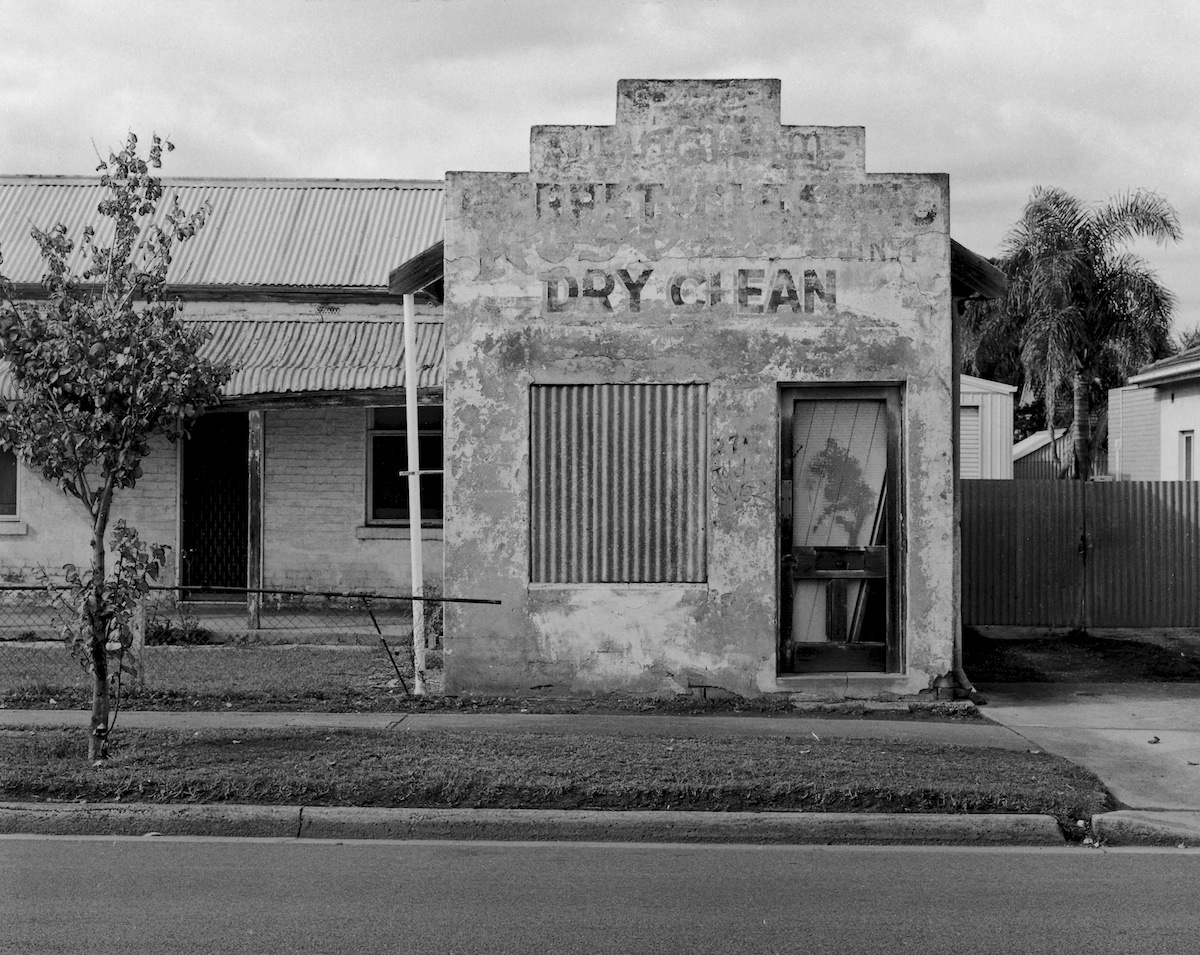 Victor Wodecki, Holbrooks Rd., 2014, silver gelatin print
Wodecki says that in the 1950s and 1960s people used to go to the corner shop to buy newspapers and lollies. Those corner shops have now disappeared because they are inefficient and anachronistic compared to the suburban retail mall owned by Westfield. Consequently, many of these shops now stand abandoned and empty. What is left, apart from the decaying buildings, are the private memories of a former mode of urban life.
Walter Benjamin, as a chronicler of modernity, called for a history which could redeem the past by yanking it into the present. His figure of the Angel of History whose face turns towards the past as she is blown into the wreckage of the future might also represent the documentary imagemaker who can only make images within the historical present, even as it evokes the historical past.
Documentary photography is usually a reconstruction-a reenactment of another time or place for a different audience-----a graphing of history, in and through, the photographic image onto the present.
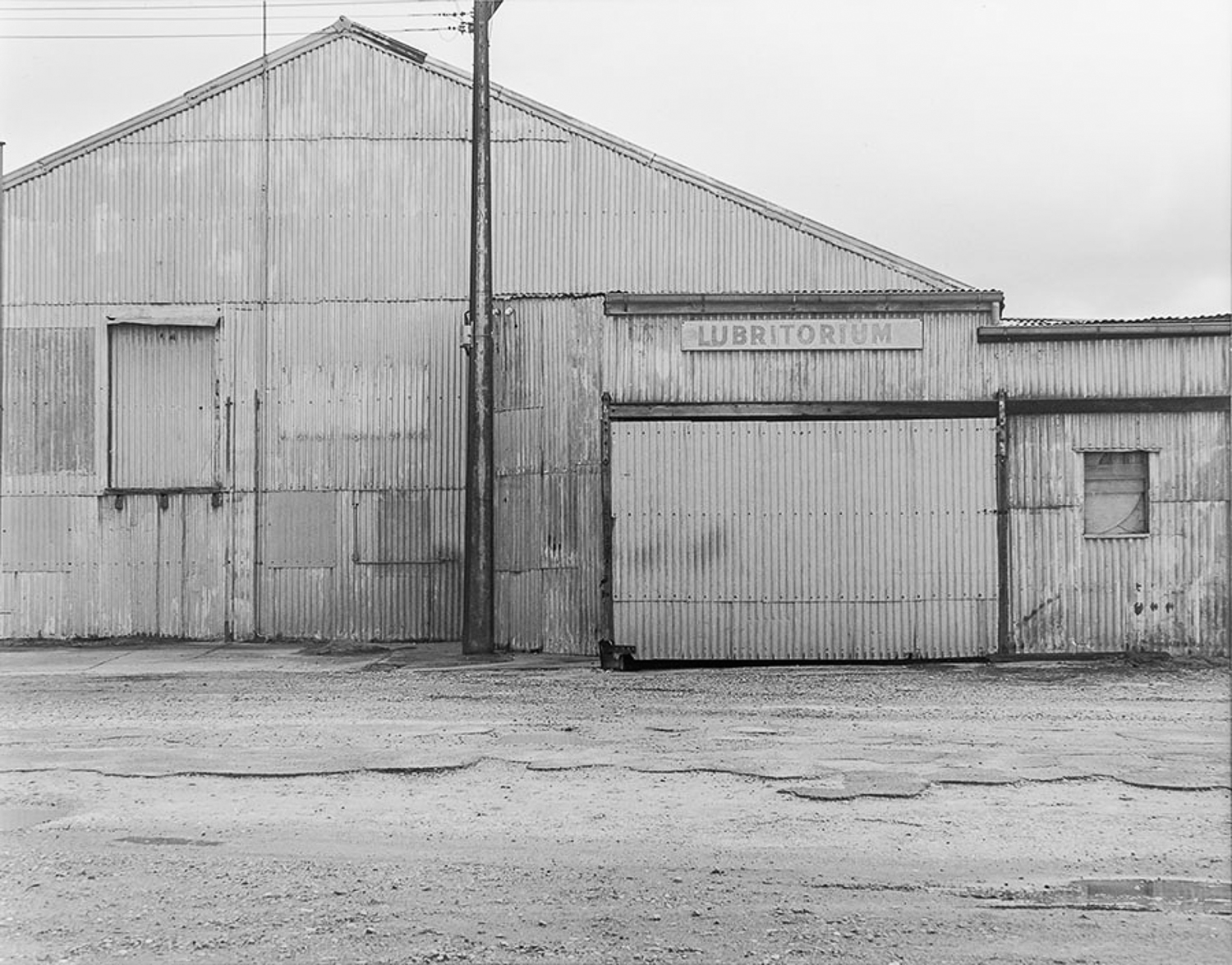 Victor Wodecki, Lubitorium, 2014, silver gelatin print
Is this a nostalgia for a past that is already lost?
Wodecki, in photographing a disappearing species in the form of traces of the past is providing a stability to an ever-changing historical reality, in the form of a visual archaeology that uncovers the past we have forgotten. What is presented to us is a collection of fragments. The photographs in themselves "are dumb" and their meaning is constructed in the web of interpretations that we give them. The importance of Wodecki's personal memories is that they indicate that his photography does not so much represent this past as it reactivates it in images of the present.
This is an example of a rethinking of documentary photography--- a recognition that photographic representation does not simply hold up a mirror to past events, since the representational refers to the codes, conventions, and social schemata within our specific culture. Wodecki's personal memories help us to make sense of his Sorry, We're Closed series. The mundane and ordinary architecture is embedded in a history, placed in relation to the past, given a new power, not of absolute truth but of repetition.
This deconstructs the all too simple dichotomy between, on the one hand, a naïve faith in the truth of what the documentary image reveals—the discredited claim to capturing events while they happen—and on the other, the embrace of fictional manipulation. Of course, even in its heyday no one ever fully believed in an absolute truth of documentary photography, since as they recognized it as a genre or style rather than the essence of photography.
The ground Sorry, We're Closed stands on is not an unearthing a coherent and unitary past; it is one that deploys the many facets of the hall of mirrors to highlight the depth of the past's reverberation with the present.
|


"Of course, even in its heyday no one ever fully believed in an absolute truth of documentary photography, since as they recognized it as a genre or style rather than the essence of photography. "
The strategies and styles deployed in documentary photography change; they have a history.
The initial form in the 1940s by Max Dupain worked within the Griersonian documentary tradition. This was centred around an objective authoritative voice that spoke the truth about things---photographs as factual documents. Hence there are important records of a changing society.