|
August 1, 2014
The 2014 Bowness Prize finalists are very diverse and are an indication of what is happening in contemporary art photography in Australia. One example is a picture of a grass tree (Xanthorrhoea) from Nici Cumpston's 2013 Contested Places series that is entitled ‘Mulyawongk’.
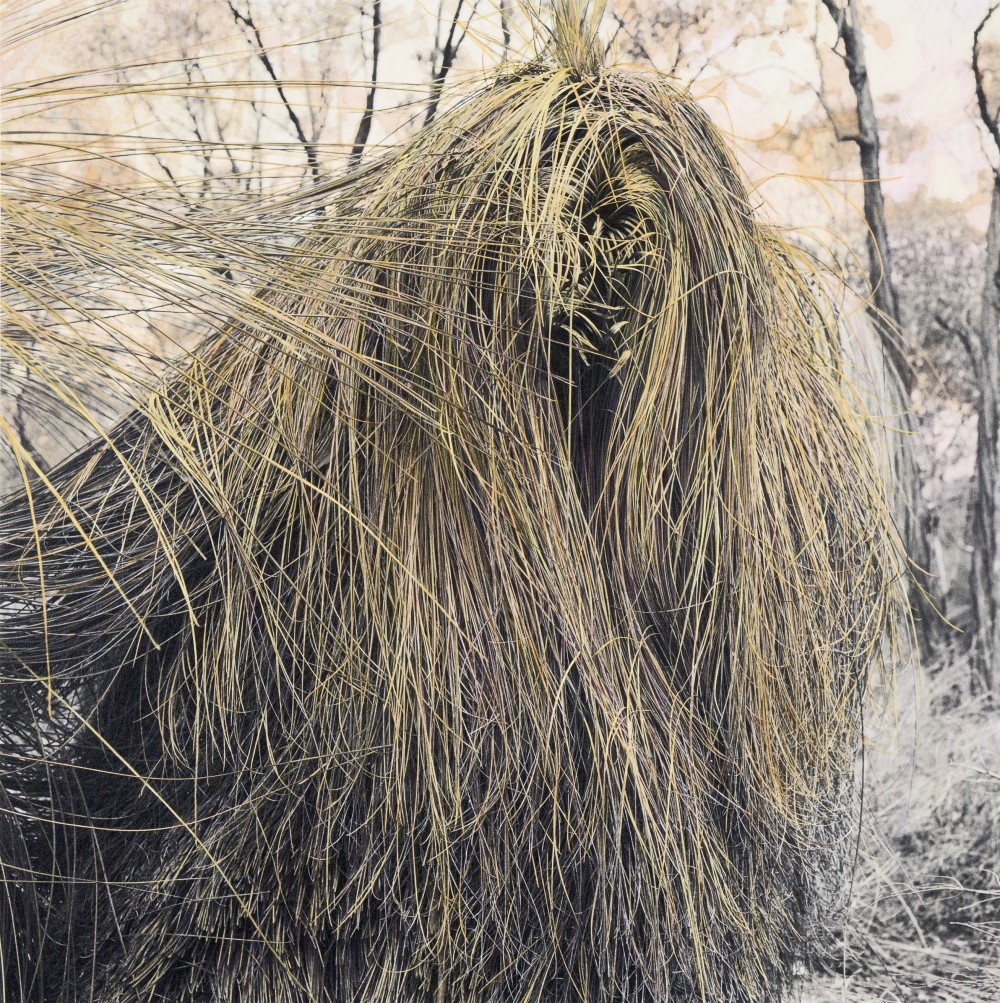 Nici Cumpston, Mulyawongk’, Whroo – Rushworth State Forest, 2013, crayon on pigment ink-jet print
Whroo Historic Reserve is a gold mining area near Rushworth, Victoria where Cumpston noticed evidence of Aboriginal peoples occupation of this land when walking around. She says:
The story of the Mulyawongk has stayed with me since I was a child growing up along the Murray River in South Australia. A Ngarrindjeri cultural story, the Mulyawongk is likened to a bunyip rising from the River if a child does something wrong. Archie Roach sings a haunting lament of his late wife Ruby Hunter, her relationship to the River and the Mulyawongk.
Cumpston is one of a number of contemporary artists addressing Indigenous issues in post-colonial Australia--an archaeological digging into the Australian landscape that reconnects to a sense of belonging to land, to place. It is the hand colouring that gives the grass tree in a dry landscape its eeriness.
So we have a photograph that needs to be read as it is overlaid with cultural meanings as it embodies the codes, values, and beliefs of our post-colonial culture. We have a picture that is ambiguous and complex.
|


check out waynes work,think you will find it interesting, he was runner up in last years bowness