|
September 18, 2014
"Of Obscured Significance' is an exhibition of historical and contemporary, photographic and mixed media art at the Murray Bridge Regional Gallery. It is curated by Beverley Southcott and is concerned with explore what it is to be in the particular here and now ie., really noticing your place and what goes on around you. The photo-media artists include Mick Bradley, Louise Flaherty, Frank Grauso, Rachel McElwee, Murray Bridge & District Historical Society Inc., Lee Salomone and Beverley Southcott.
Mick Bradley is known in Adelaide for his recent City Streets book which he co-authored with Lance Campbell. This is the most thorough rendering of Adelaide’s streets ever. It takes the reader on an engaging stroll past Adelaide’s street fronts of 75 years ago and today. His body of photographic work also includes explorations of the regional landscape of the Adelaide hills:
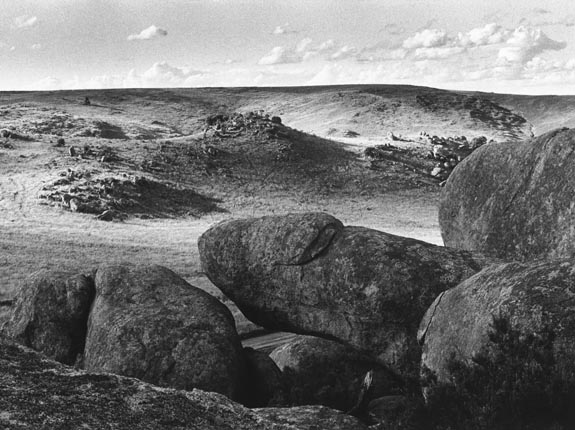 Mick Bradley, Palmer, silver gelatin print, 1984
This picture of the Mt Lofty Ranges brings our attention to the ways that daily significance of the regional South Australian landscape is obscured. This provides a new way of seeing our regional landscape afresh, since we drive past it in the car and only give it a quick glance through the car window.
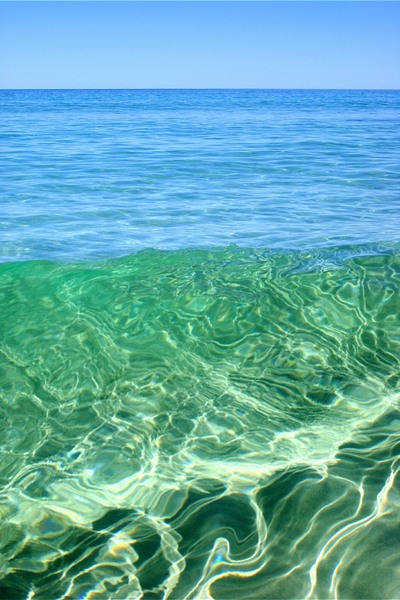 Mick Bradley, Kangaroo Island, South Australia
The exhibition has a conceptual emphasis on the exploration and development of ideas surrounding those moments and aspects in everyday life that are often deemed as just normal, ordinary, perhaps even non-essential, but are in fact potentially worthy and notable and should not simply be overlooked.
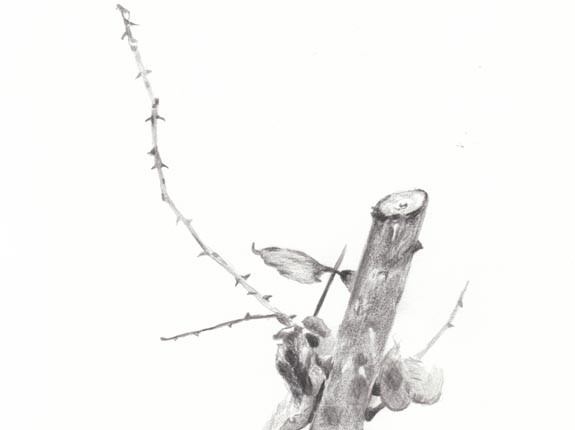 Louise Flaherty, "Rose", 2014, pencil on paper.
Beverley Southcott, the curator, is interested in the way that a corporate controlled urban environment--as epitomised in non places, enclosed shopping malls and high rise office towesr---gives rise to an anxiety about how we experience our everyday reality in a globalised consumer culture. From this anxiety emerges a photography that deploys the 19th Romantic conventions of the sublime to create a postmodern sublime.
Southcott mentions the work of Andreas Gursky and interprets his work as large format landscapes and cityscapes that overwhelm the viewer through creating a sense of an immense external power-something far greater than the individual self. Gursky's photos , she says, reflect an otherness inherent within the everyday and the ordinary as we experience these within the megalopolis.

Beverley Southcott, "City Tao Centre", 2012, C type digital print, metallic paper
There is a sense here of the familiar being "made strange" to reveal an unrecognised aesthetic dimension in everyday life. Because the everyday is so familiar, it is necessary to make it strange, or defamiliarize it, in order to open its aesthetic space. To paraphrase Viktor Shklovsky, the Russian Formalist, visual art is our language of the everyday defamiliarized. Artness, so to speak, is the result of working language so that it “makes strange” or interrupts our habituated or automatic perception of the word.
By interrupting our automatic perception of the word in this way, the reader is forced to make extra effort in determining the meaning of the image and in so doing, Shklovsky argues, our wonder of the world is re-enlivened. So, the artist’s job is to recover “the sensation of life” – that is, to render the world unusual or unfamiliar to the extent that the viewer experiences the world anew.
If we accept that artness is a product of “making strange” then photography/drawing will always have to search out new ways of defamiliarizing the reading experience. Understood like this, art history becomes the domain of discontinuities and interruptions rather than the smooth “progression” that some of the more conservative critics would advocate.
|


"There is a sense here of the familiar being "made strange" to reveal an unrecognised aesthetic dimension in everyday life."
Defamiliarization or ostranenie is an artistic technique of presenting to audiences common things in an unfamiliar or strange way, in order to enhance perception of the familiar.
The term “defamiliarization” was first coined in 1917 by Viktor Shklovsky to highlight how poetic language is fundamentally different than the language that we use every day.